What to Discuss With Your Commercial Interior Designers

Clear communication is one of the most powerful tools you have when planning an office fitout. The conversations you have with your interior designer early in the process will shape everything from how your teams collaborate to how clients experience your workspace. When your brief is clear and aligned, the result is a functional, cohesive office that feels connected to your brand.
If you’re wondering what to discuss with commercial interior designers, the most important topics extend beyond aesthetics. A successful fitout relies on a deep understanding of your business, your people, and your long-term goals.
When brainstorming questions to ask commercial interior designers, the key discussion points should be brand identity, space planning and workflows, technology integration, materials, and how comfortable the office will be for your employees.
Your Brand Identity and Values
One of the most important areas to cover when thinking about what to discuss with commercial interior designers is your brand identity. Your office is a physical expression of who you are and what you stand for; it sets expectations before anyone speaks.
Important information to share:
- Brand values and story: What emotions or principles should the space embody?
- Visual identity: Colours, textures, and signage requirements.
- Audience and positioning: Corporate, boutique, creative, technology-driven, or community-focused?
- Desired atmosphere: Warm, calm, energetic, minimal, or bold?
Research in environmental psychology suggests workplaces that reflect brand identity strengthen trust and enhance user satisfaction
Questions to ask your commercial interior designer
- How can our brand be expressed through spatial and material choices?
- What design elements best reflect our values?
How Your Teams Work, Now and in the Future
An office fitout should reflect your employees’ work behaviours and patterns. This is one of the most critical topics to bring to any discussion about what to discuss with commercial interior designers.
Talk about:
- Team structures and workflows
- Collaboration patterns
- Meeting room needs and privacy
- Hybrid working requirements
- Storage and support spaces
Planning for future growth is essential. Flexible, modular commercial design style can prevent costly reconfigurations later.
Questions to ask your commercial interior designer
- How can the layout optimise collaboration without sacrificing focus?
- How can the design support our future growth?
Space Planning, Flow, and Zoning
Effective space planning shapes how people move and interact throughout your workplace.
Discuss:
- Reception and arrival experience
- Circulation paths
- Functional zoning such as quiet zones, collaborative areas, breakout spaces, focus rooms
- Accessibility compliance
Findings from workplace research groups such as Steelcase highlight that clear zoning significantly improves productivity and reduces cognitive load.
Questions to ask your commercial interior designer
- How will people move through the space?
- Does this zoning support deep work, collaboration, and wellbeing?
Technology Integration
Technology should be planned from the start, not added later.
Discuss:
- AV and meeting room systems
- Connectivity requirements
- Charging and docking integration
- Smart systems such as lighting automation, access control, sensors
Questions to ask your commercial interior designer
- How can we future-proof our technology integration?
- What infrastructure do we need to support hybrid meetings?
Materials, Finishes, and Sustainability
Finishes influence durability, maintenance, comfort, and brand expression.
Cover:
- High-durability materials for busy areas
- Maintenance and cleaning considerations
- Sustainable options such as low-VOC paints, recycled materials, FSC-certified timber
(Guidance available from the Green Building Council of Australia) - Brand-aligned colours and textures
Sustainable environments improve wellbeing and reduce operational costs.
Questions to ask your commercial interior designer
- What materials balance durability, brand alignment, and sustainability?
- How can we improve indoor environmental quality?
Lighting, Acoustics, and Comfort
Comfort is fundamental to performance. Even the most visually striking office will underperform if lighting and acoustics are overlooked.
Discuss:
- Natural light distribution
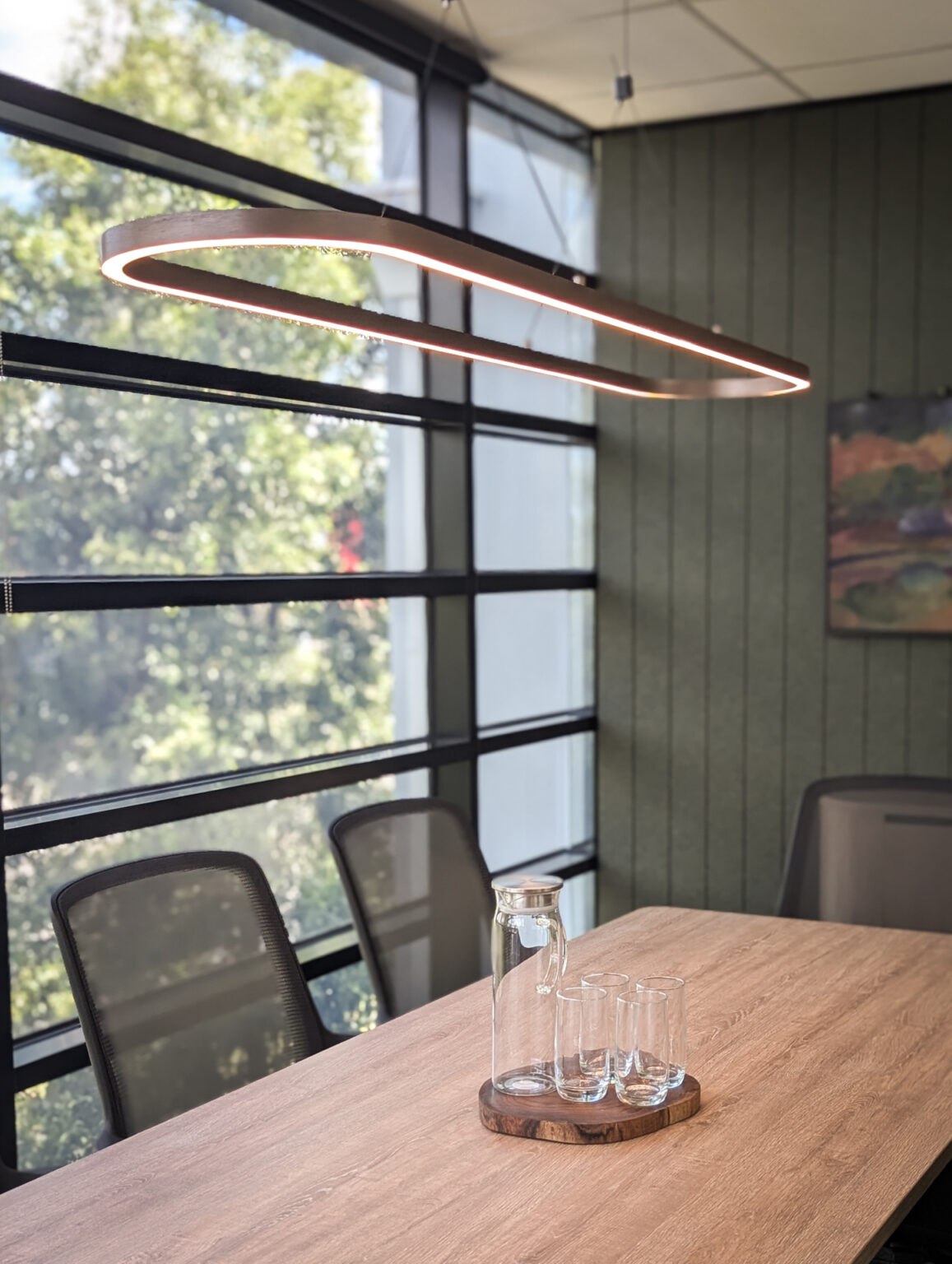
- Layered lighting — task, ambient, feature
- Acoustic zoning and treatments
- Thermal control and airflow
Studies link environmental quality such as air, lighting, acoustics, and ventilation to cognitive performance gains in the workplace.
Questions to ask your commercial interior designer
- How will lighting enhance performance and wellbeing?
- What acoustic solutions are best for our layout?
Compliance, Safety, and Buildability
A safe, compliant, and buildable design is essential.
Discuss:
- Fire egress and emergency access
- Accessibility standards
- Structural constraints
- WHS considerations
- Landlord requirements
Questions to ask your commercial interior designer
- Are there any constraints we should know before finalising the design?
- What approvals are required before construction?

Budget, Timeline, and Approvals
Clear expectations ensure the project runs smoothly.
Discuss:
- Budget parameters and priorities
- Timeline and construction phases
- Lead times
- Landlord and building approvals
Questions to ask your commercial interior designer
- What is the most cost-effective way to achieve our goals?
- Where should we invest more for long-term value?
The SensaARC Methodology
Knowing what to discuss with commercial interior designers and having the right questions ensures your office fitout reflects your brand, supports your people, and serves your business long term.
With Sensa, you do not have to worry about any of this. Every Sensa project follows our SensaARC methodology, beginning with Discover. This is when we take the time to understand your organisation, ask the right questions, and identify what your people truly need. Only then do we design a workspace that responds to those needs with clarity and purpose.