Why Organisations are Integrating Gallery Seating into their Offices
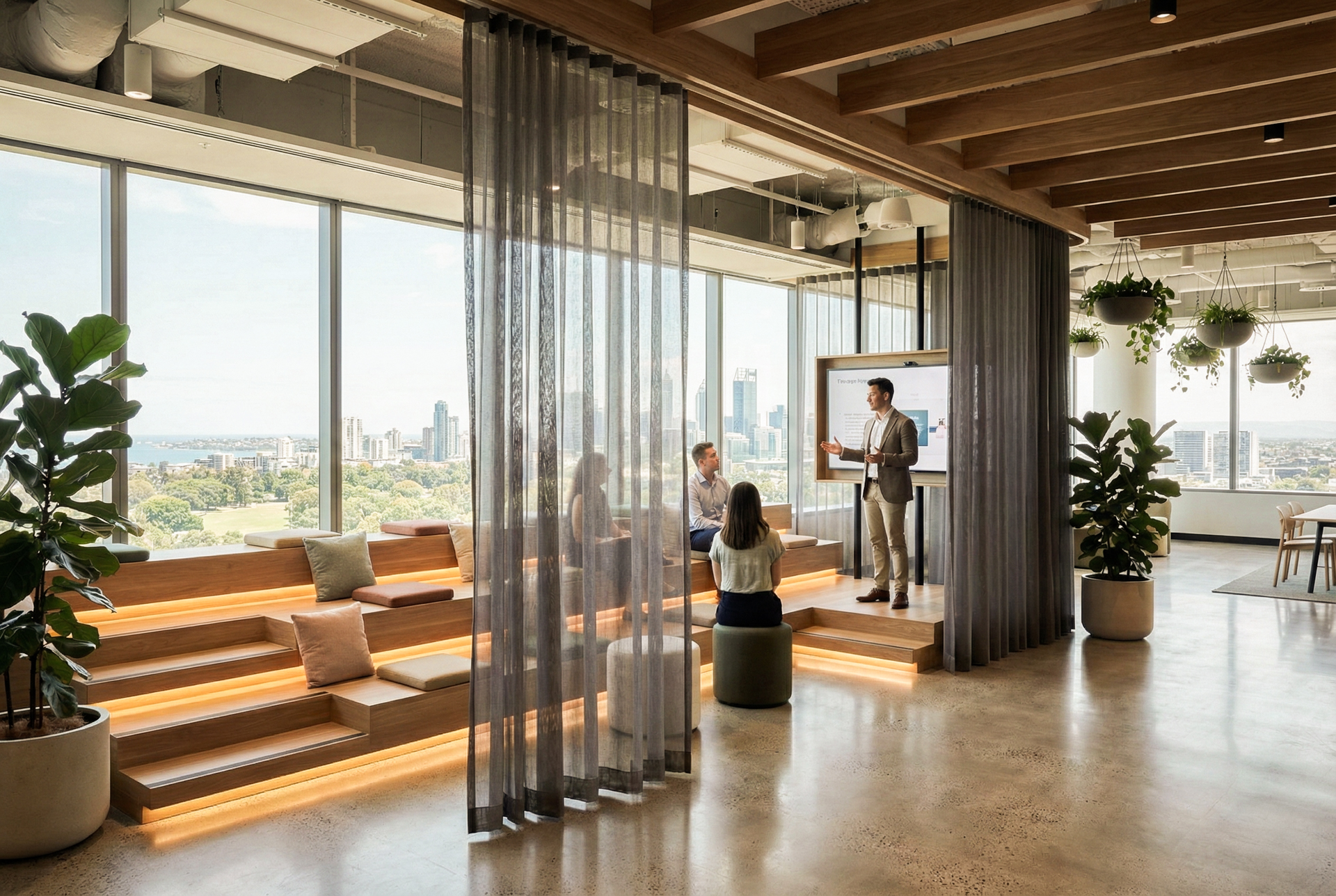
Organisations are making more deliberate choices about how their offices support people. Space is being asked to work harder, support a wider range of activities and contribute to culture in a tangible way. Within this shift, gallery seating has become a considered inclusion rather than a design statement.
Often referred to as tiered or amphitheatre style seating, gallery seating creates a shared place where people can gather with purpose. It supports how teams communicate and engage, while contributing to a workplace that feels open, considered and human.
What is Gallery Seating
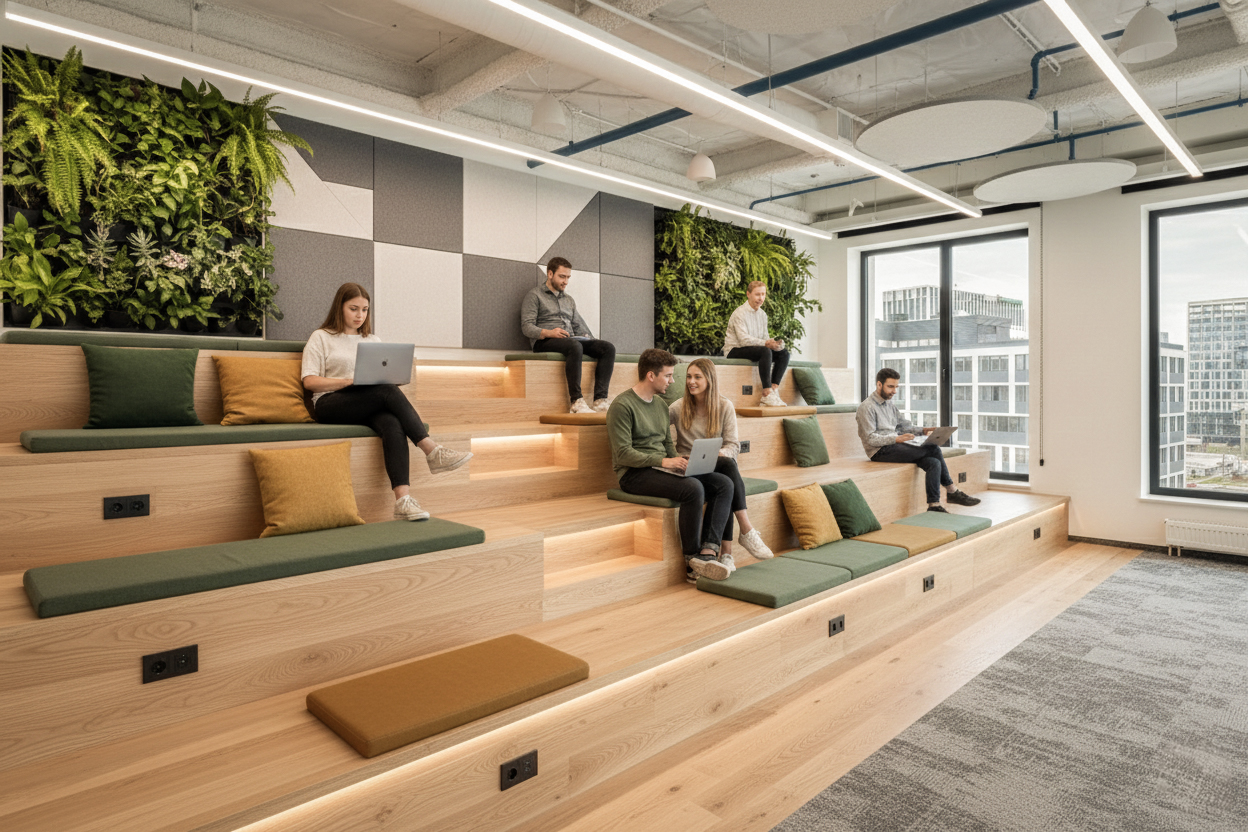
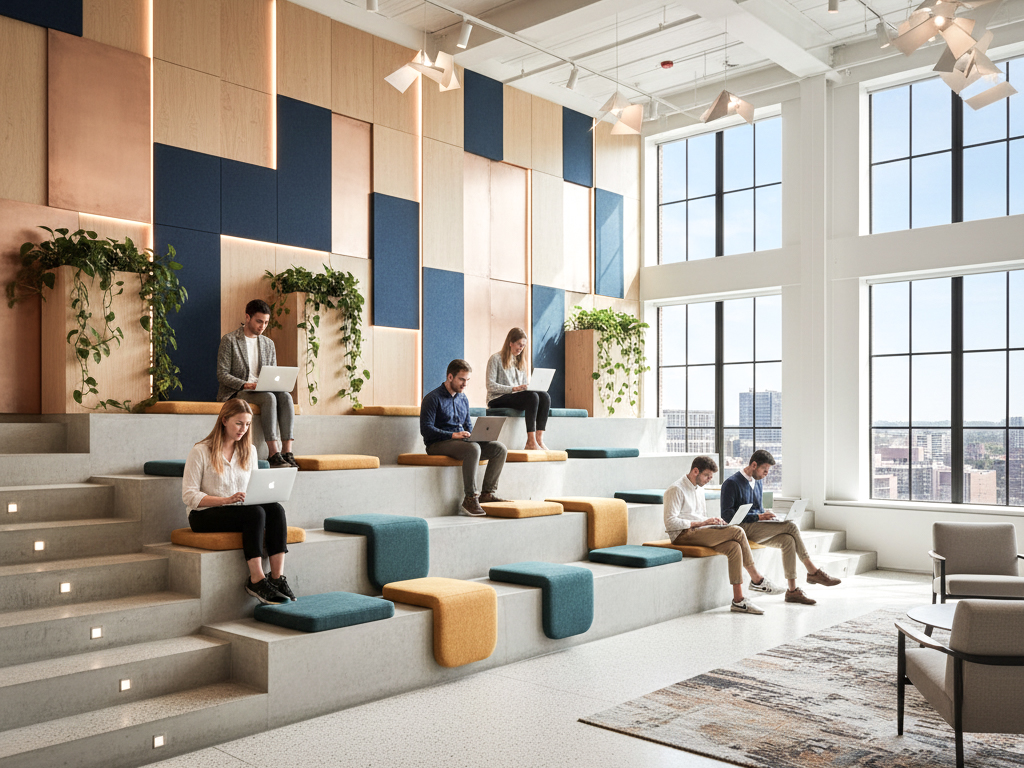
Gallery seating is a tiered seating arrangement integrated into the workplace. It can take the form of stepped platforms, timber benches or upholstered tiers, designed to comfortably accommodate groups of people in an open setting.
Compared to traditional meeting rooms, gallery seating feels relaxed and approachable. The absence of tables and enclosed walls encourages people to gather naturally, supporting more fluid and engaging interactions.
Why gallery seating works in modern workplaces
Supports collaboration at scale
Teams need spaces that respond quickly to different ways of working. Gallery seating allows organisations to host town halls, team updates, workshops and presentations without relying on temporary furniture or external venues. Clear sightlines and shared focus help conversations feel inclusive and engaging.
Encourages everyday knowledge sharing
Learning happens continuously across the workplace. Gallery seating creates a visible platform for sharing ideas, presenting projects or hosting guest speakers. These moments reinforce a culture where knowledge flows openly between teams.
Strengthens culture and connection
Bringing people together in a shared space helps culture take shape. Gallery seating supports meaningful moments such as celebrations, announcements and informal conversations that build trust and connection across the organisation.
Uses space intelligently
In offices where efficiency matters, gallery seating delivers flexibility. Outside of larger gatherings, it can function as casual seating, a breakout zone or a place for quiet reflection. One space can support multiple needs throughout the day.
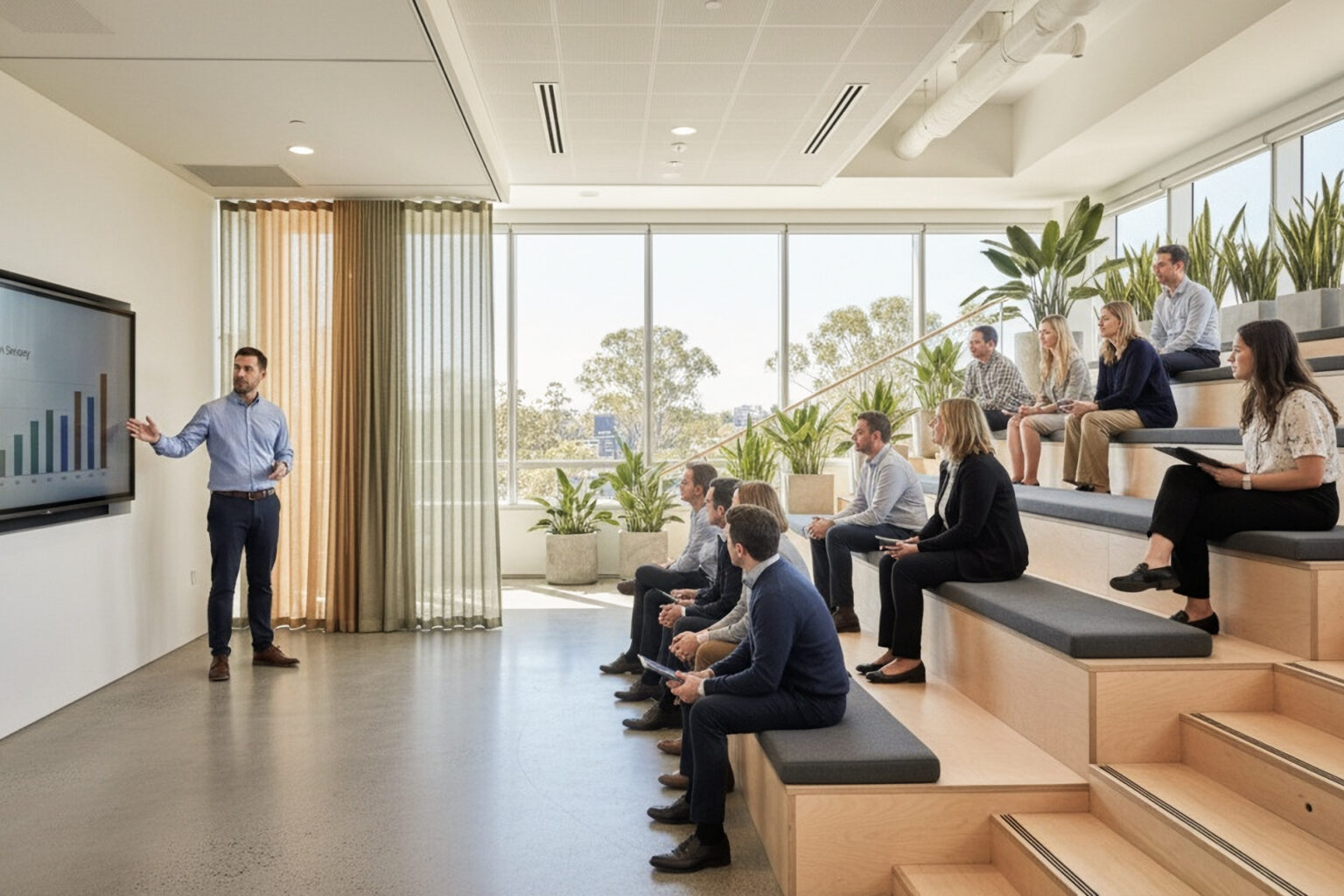
Design considerations that make the difference
Effective gallery seating is shaped by thoughtful design decisions.
Acoustics are essential. Soft finishes, carefully selected materials and spatial planning help manage sound and support clear communication.
Comfort plays a key role. Varied seating heights, back support, cushions and access to power allow people to use the space comfortably for both short and extended periods.
Accessibility should be integrated from the outset. Step free access, clear circulation paths and inclusive seating options ensure everyone can participate with ease.
Technology needs to feel seamless. Screens, lighting and audio should be integrated into the design so the space functions effortlessly when required.
Where does gallery seating fit best
Gallery seating often sits within collaboration hubs, near breakout areas or alongside kitchens and cafés. In many workplaces it becomes a central anchor, a place people naturally gravitate towards during the day.
Visibility and ease of access are key. When the space is easy to find and simple to use, it reinforces collaboration as a core part of how the organisation works.
A clear signal of a contemporary workplace
Gallery seating communicates how an organisation values connection, shared experience and purposeful interaction. It reflects a move towards openness and collective engagement.
In a modern office, gallery seating helps shape a workplace people want to use. A place designed to support conversation, learning and momentum, while bringing teams together in a meaningful way.