How Workspace Design Supports Cultural Shift During Organisational Change
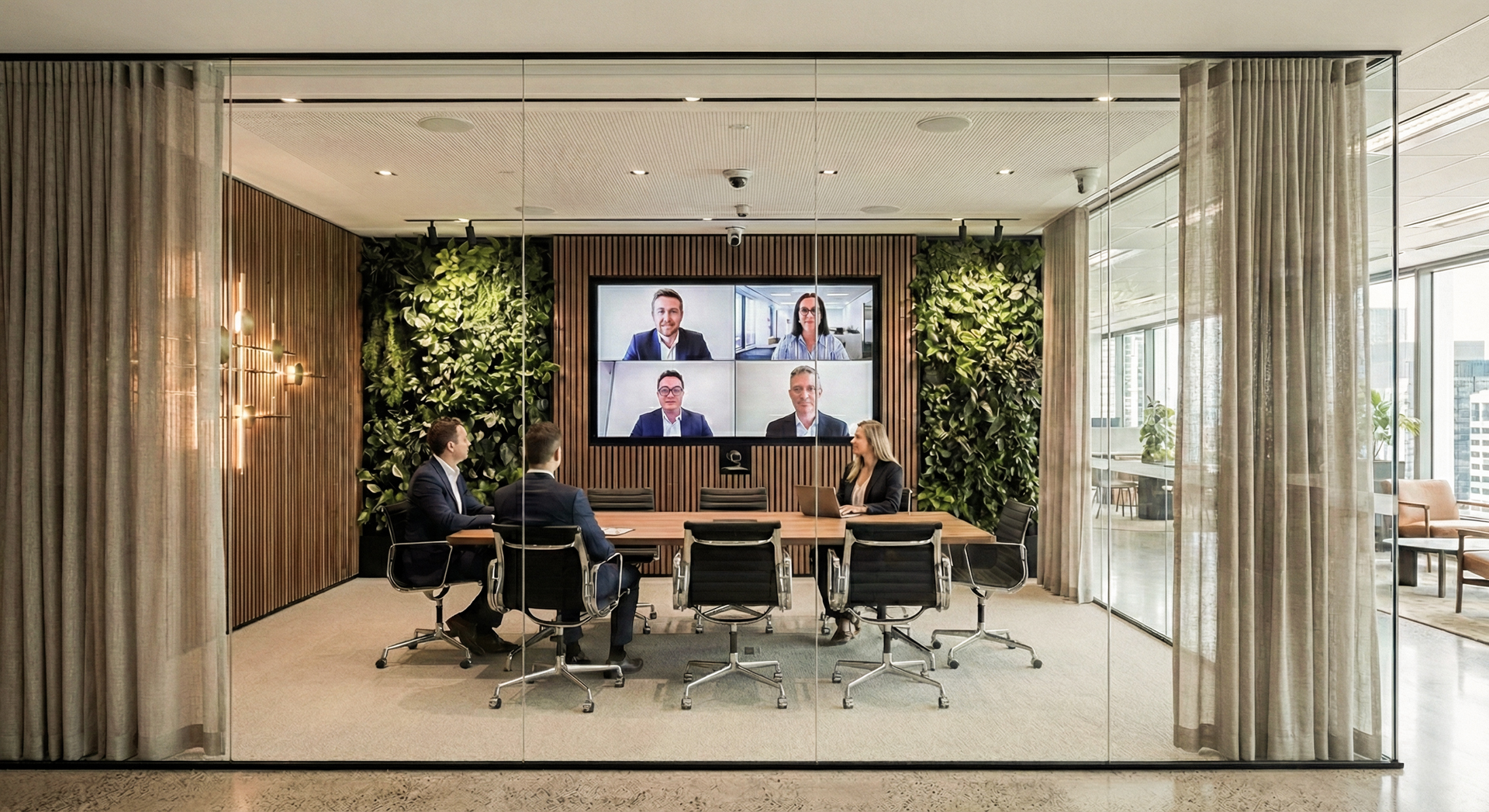
Organisational change is rarely just structural. Whether driven by growth, merger, digital transformation or a shift in operating model, real change is cultural. It influences how people make decisions, collaborate, lead and take accountability.
Yet many organisations underestimate the role the physical workplace plays in this transition. Culture does not live only in strategy decks or leadership messaging. It is reinforced daily through behaviour. And behaviour is shaped, in part, by the environments people work in.
For business leaders navigating change, workspace design is not an aesthetic consideration. It is a practical tool for signalling intent, reinforcing values and enabling new ways of working to take hold.
Culture is Experienced, Not Announced
During periods of change, employees look for cues. They observe what leaders prioritise, how decisions are made and whether the organisation’s stated values are reflected in reality.
The physical workspace is one of the most visible signals in this process. When the environment supports old behaviours, even well-communicated change strategies struggle to gain traction. Conversely, when space aligns with new cultural goals, it accelerates adoption and builds credibility.
If collaboration is the goal but the office remains dominated by enclosed offices and rigid layouts, the message is diluted. If trust and autonomy are central to the future state but the environment prioritises surveillance and uniformity, resistance grows.
Workspace design makes cultural change tangible.
Reinforcing New Ways of Working
Most organisational change involves a shift in how work gets done. This may include more cross-functional collaboration, faster decision-making, greater focus on learning or a move toward hybrid work.
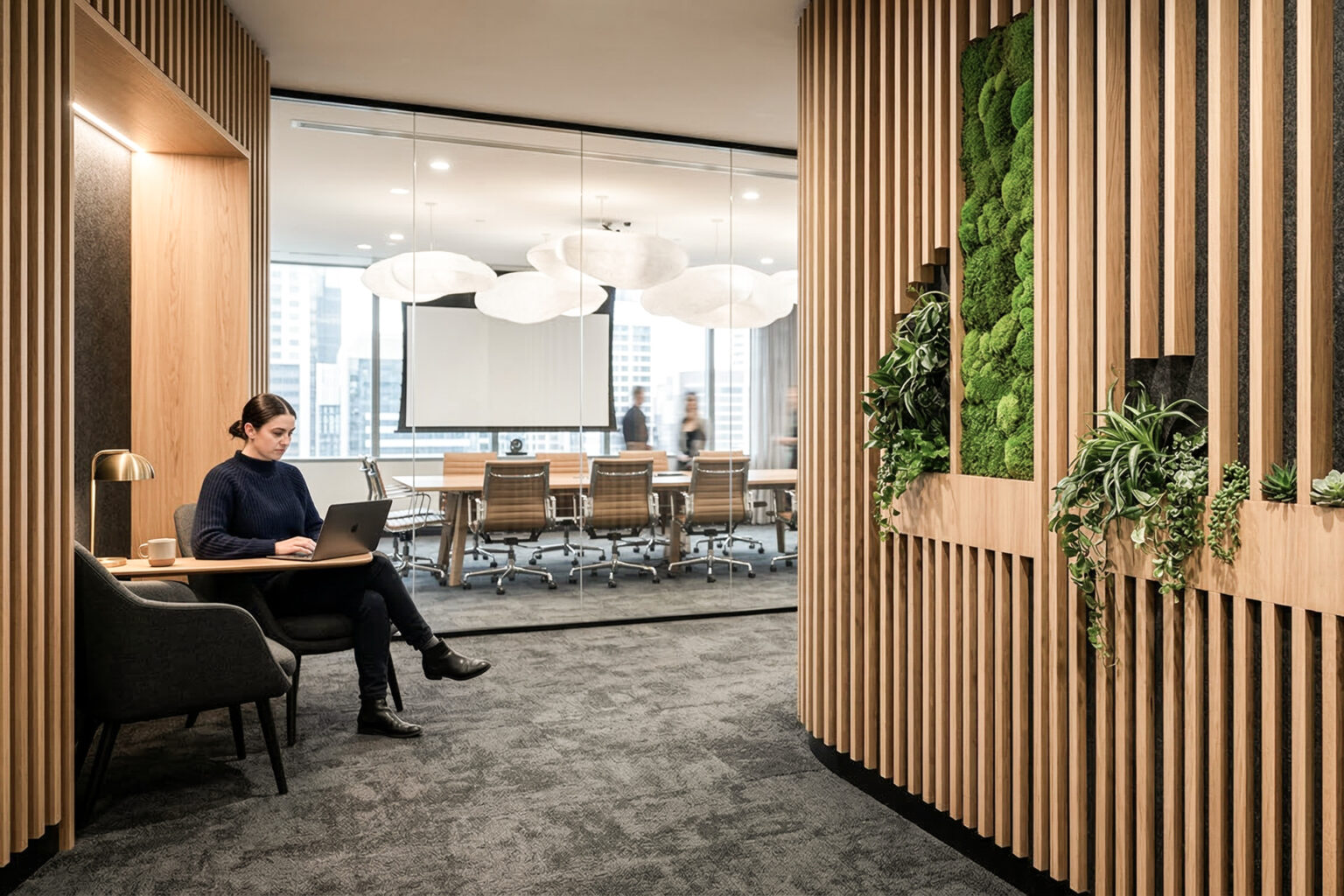
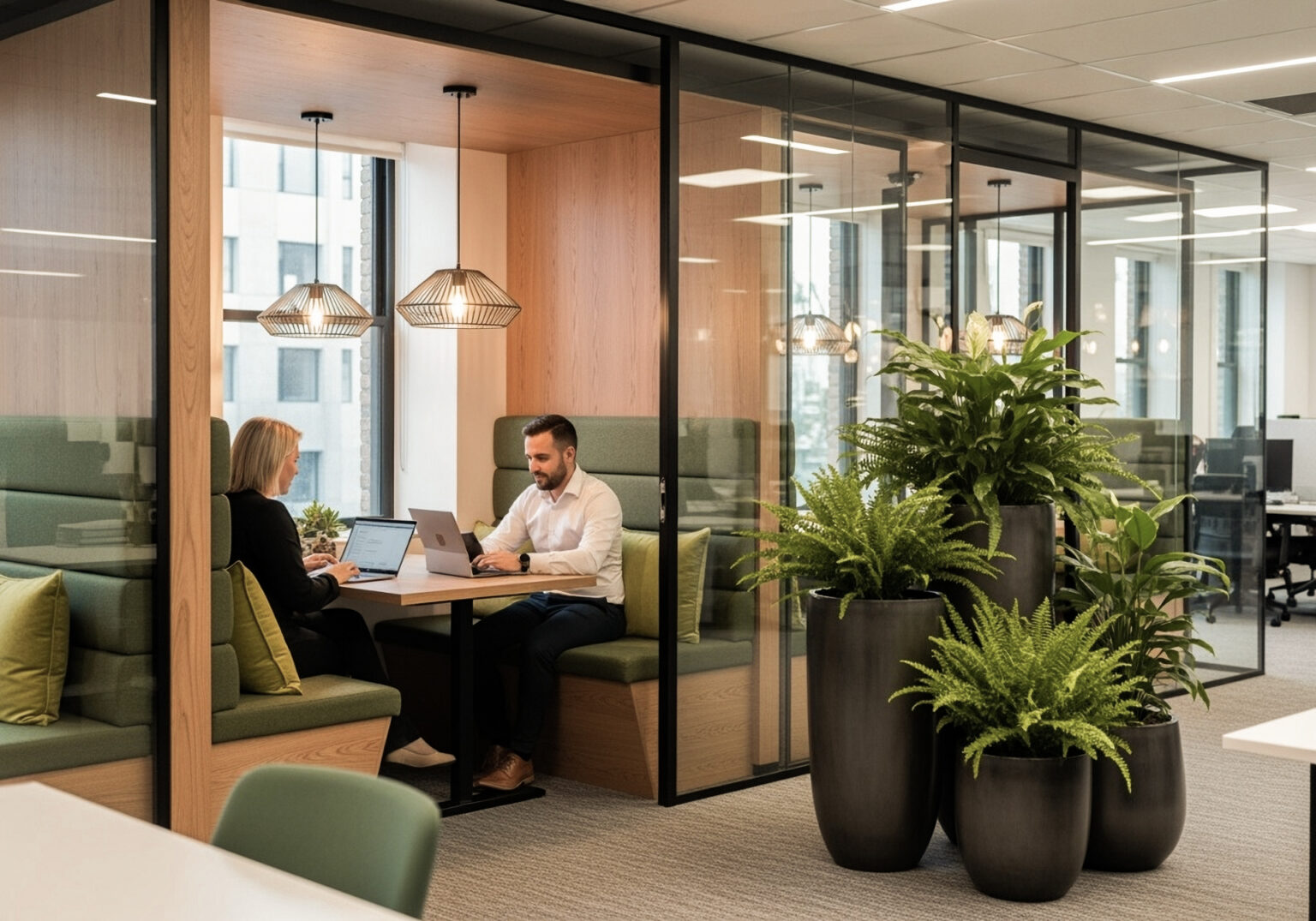
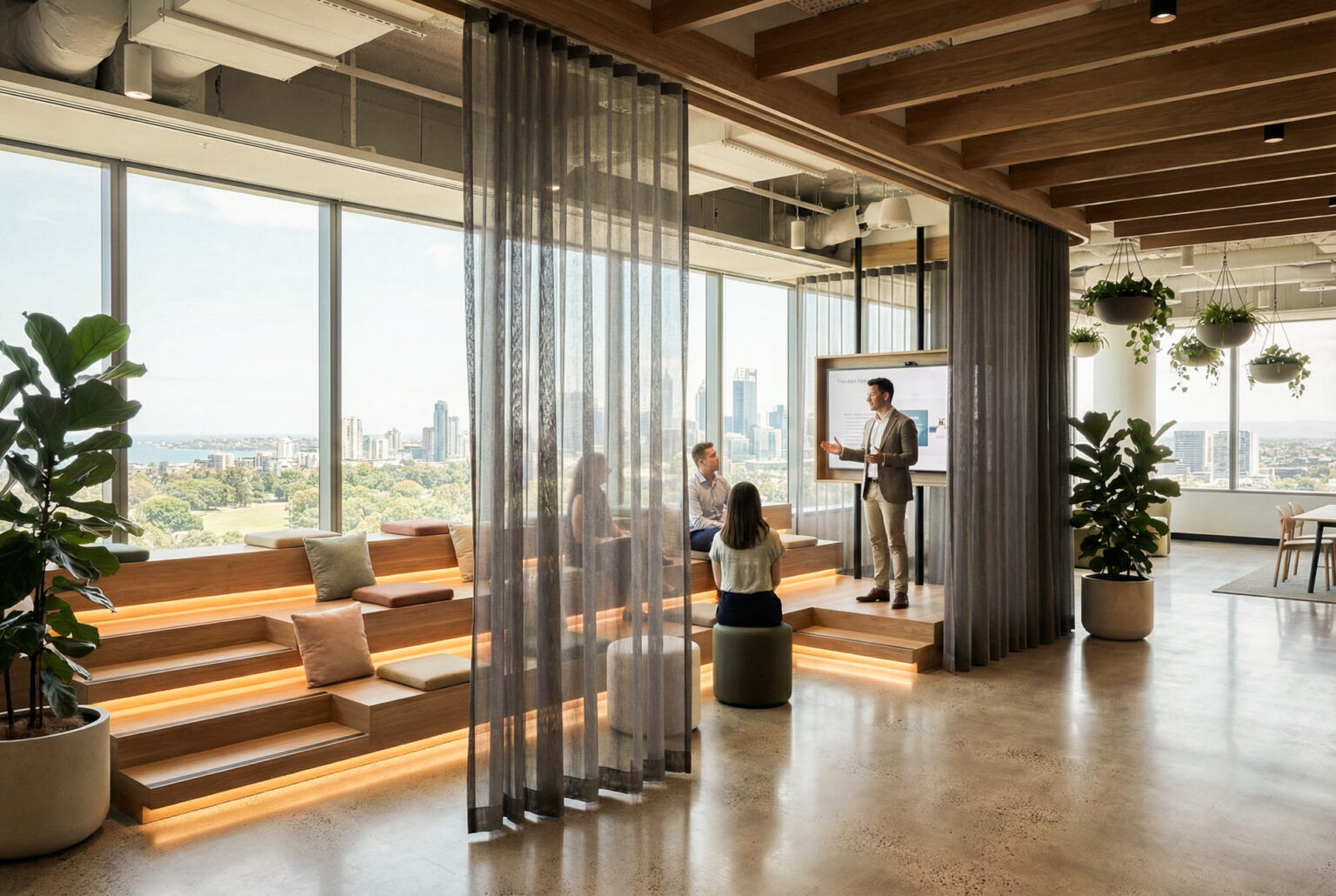
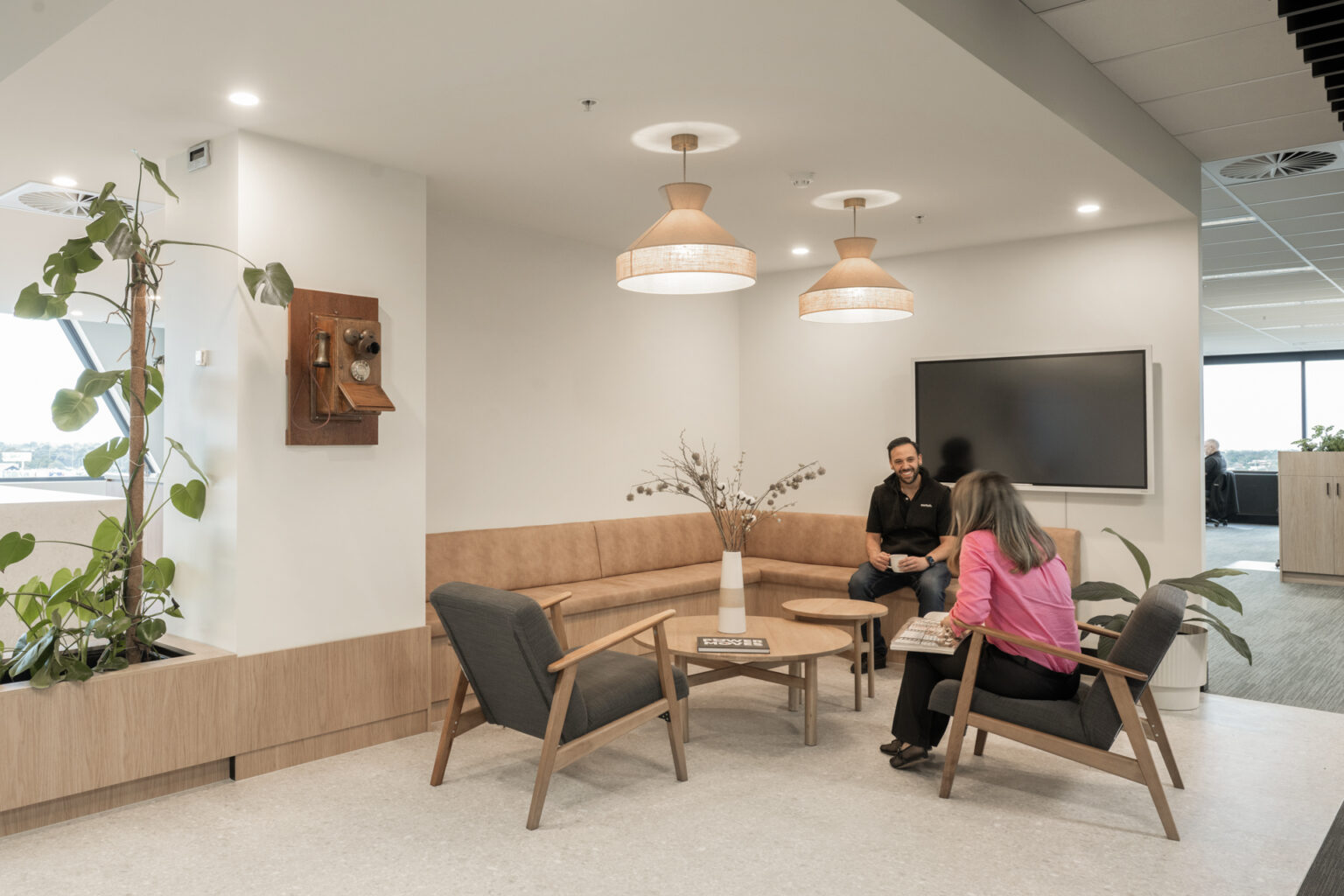
Well-designed workspaces support these shifts by removing friction. They provide choice, clarity and flexibility. Open collaboration zones sit alongside spaces for focused work. Meeting environments support both in-person and remote participation without compromise. Informal spaces encourage spontaneous interaction, not forced engagement.
Importantly, these environments allow people to adopt new behaviours without being instructed to do so. The space guides action naturally, making change feel intuitive rather than imposed.
Leadership Visibility and Accessibility
Cultural change often requires leaders to operate differently. More visible leadership, faster communication and stronger alignment across teams are common objectives.
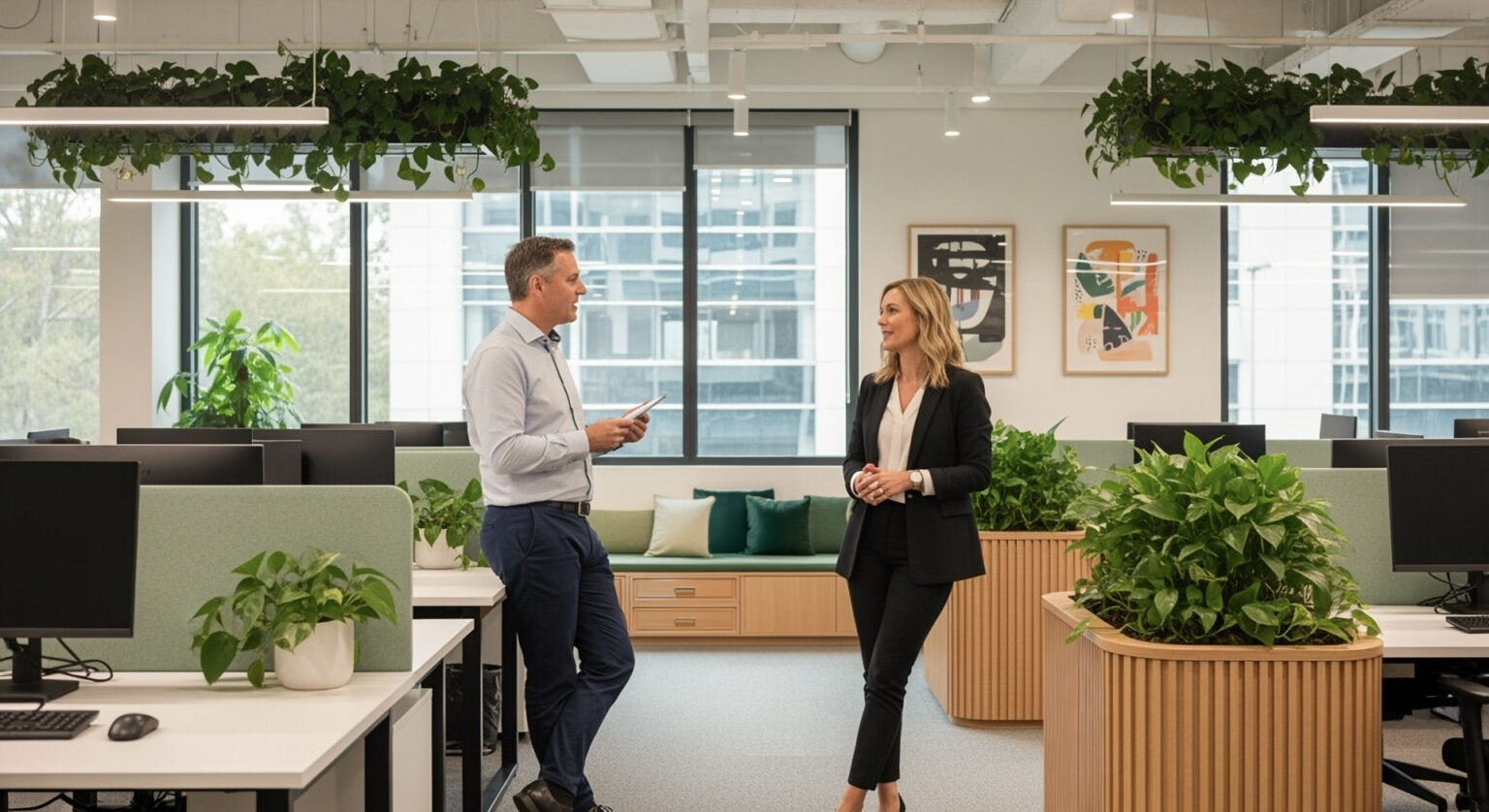
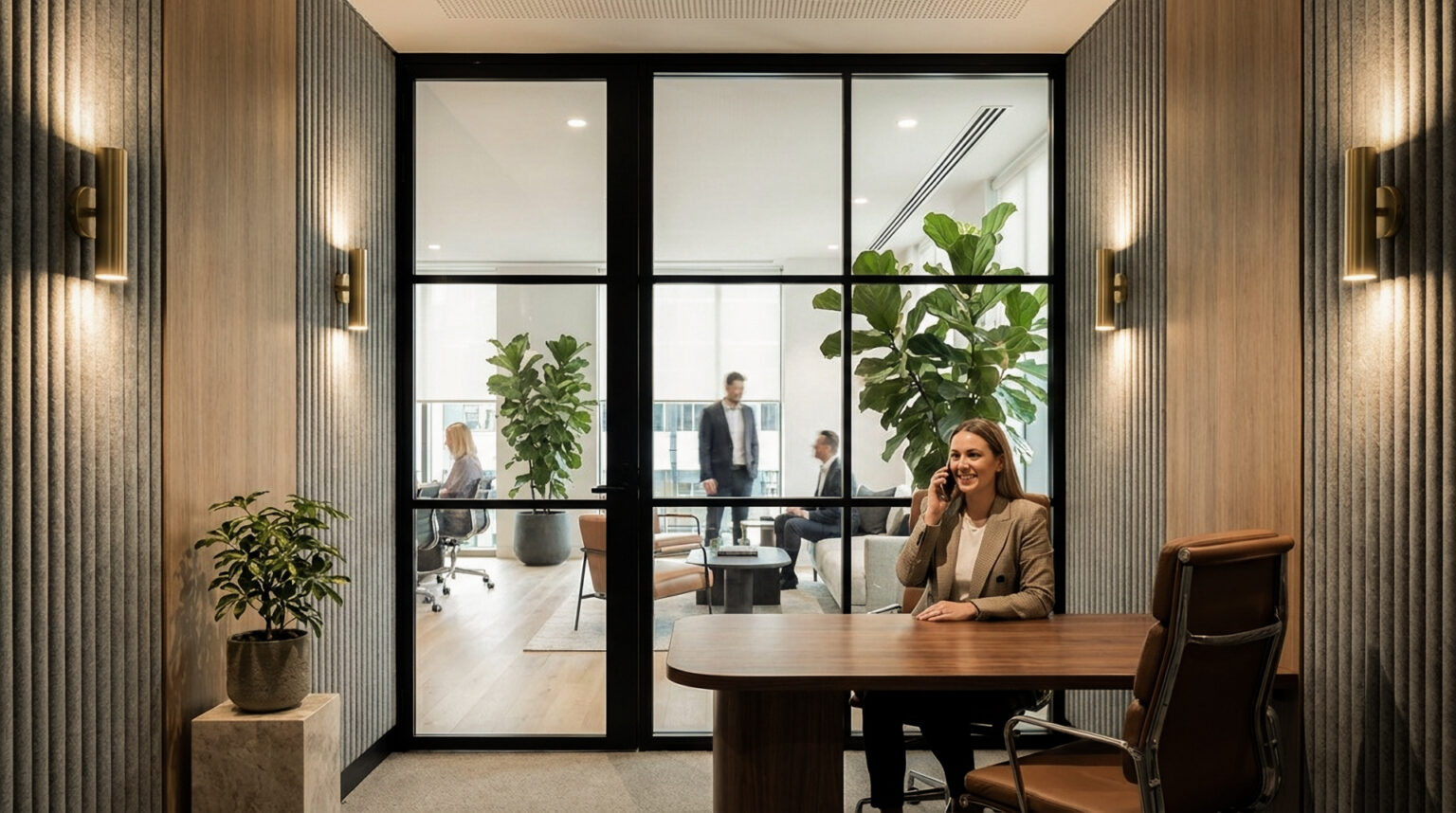
Workspace design can support this by breaking down unnecessary hierarchy while still respecting the need for privacy and focus. Leaders who work closer to their teams, use shared spaces and move fluidly through the workplace reinforce openness and approachability.
This is not about removing offices entirely. It is about designing leadership spaces that align with the desired culture. Spaces that allow confidential conversations, focused thinking and strategic work, while remaining connected to the broader organisation.
Supporting Psychological Safety During Change
Change introduces uncertainty. Employees may feel unsettled, distracted or fatigued as new structures and expectations emerge.
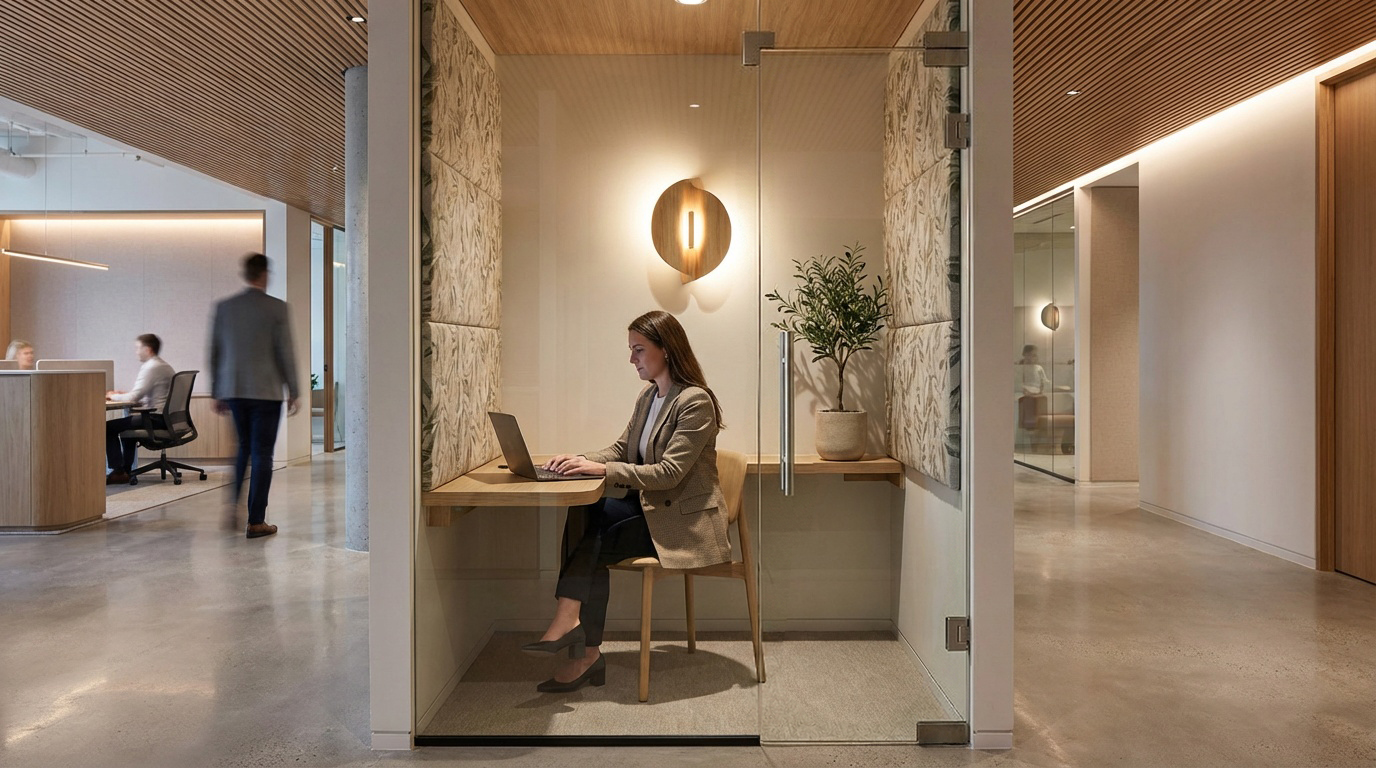
A well-considered workspace supports psychological safety by offering control. Choice of where and how to work helps people manage energy, concentration and interaction levels. Acoustic comfort, access to natural light and thoughtful zoning reduce stress and cognitive load.
When people feel physically supported, they are more open to change. They engage more readily, adapt faster and contribute more constructively.
This is particularly critical during transformation periods, when resilience and trust are essential.
Embedding Values into the Everyday Experience
Values are often articulated during change initiatives. Collaboration, innovation, wellbeing, sustainability or accountability may feature prominently.
Workspace design provides an opportunity to embed these values into the everyday experience. Sustainable materials and adaptive reuse reinforce environmental commitments. Wellness-focused design supports people-centric values. Spaces designed for knowledge sharing reinforce learning cultures.
When values are experienced rather than stated, they become credible. Employees do not need to be reminded what the organisation stands for. They feel it when they arrive each day.
Change is More Successful when Space Evolves with It
One of the most common missteps during organisational change is treating the workplace as a static backdrop. Change strategies evolve, but the environment remains fixed.
Successful organisations approach workspace as an adaptable platform. One that can evolve as teams, structures and priorities shift. This flexibility reduces disruption, supports future growth and signals confidence in the organisation’s direction.
For C-suite leaders, this mindset shifts the conversation from cost to capability. The question becomes not “How much space do we need?” but “What behaviours do we need to enable now and in the future?”
Designing with Intent
Cultural change does not happen overnight. It requires consistency, clarity and reinforcement across every touchpoint.
Workspace design is one of the few levers leaders can pull that influences behaviour at scale, every day, without additional effort. When aligned with strategy, it becomes a quiet but powerful driver of change.
For organisations navigating transition, the workplace should not lag behind the vision. It should lead it.
At Sensa, we design and deliver workspaces that support change with purpose. Spaces that help leaders move from intent to impact, and cultures shift from aspiration to reality.
Because when the environment makes sense, change does too.