Why Early Office Fitout Decisions Matter Most
When planning a new workplace, many organisations focus heavily on timelines. The emphasis is often on how quickly a space can be built, furnished, and occupied. However, the most influential stage of any fitout happens well before construction begins.
Early office fitout planning decisions shape how a workplace performs for years to come. A strong workplace design strategy influences budget certainty, spatial efficiency, employee experience, and the ability for the business to grow.
While construction speed can determine when a space opens, workplace design strategy determines how well it works. Making strategic office fitout decisions before construction results in a more productive and effective space in which your team can thrive.
The True Role of Early Office Fitout Planning
Before design drawings are finalised or contractors are engaged, organisations must define how the workplace should support their people and operations. This is where workplace design strategy begins.
At Sensa Interiors, our end-to-end office fitout planning process follows the SensaARC methodology of Discover, Design, and Deliver.
Discovery Stage
We undertake:
- Stakeholder consultation
- Complete site survey
- Workspace strategy analysis
- Top-line cost analysis
- Project timeline planning
In doing so, we ask questions like:
- How do teams collaborate and communicate?
- What types of workspaces are required?
- How will the workplace support future growth?
- What technology and infrastructure are needed?
- How should meeting, focus, and social spaces interact?
By covering these bases before we move onto the Design stage, we ensure early fitout decisions are aligned with what your workplace actually needs. In doing so, we can make office fitout decisions before construction and ensure they are implemented in our Deliver stage.

Why Early Fitout Decisions Influence Budget Control
Budget overruns in office projects rarely occur because of construction delays alone. They also stem from late changes to design, infrastructure, or spatial planning.
This is why early fitout decisions informed by a clear workplace design strategy are critical for financial control.
At Sensa, we ensure to:
- Accurately scope building services and infrastructure
- Identify structural or compliance considerations
- Coordinate technology and data requirements
- Avoid redesigns that occur mid-construction
Changes made during construction often require adjustments to electrical systems, partitions, ceilings, or mechanical services. These modifications can add significant costs and extend timelines.
By contrast, early strategic fitout decisions create clarity before construction begins, reducing the likelihood of costly revisions.
Designing Workflows, Not Just Workspaces
A successful workplace is designed around how your people actually work. Office fitout planning allows organisations to analyse workflows and ensure the environment supports them effectively.
This is where workplace design strategy becomes essential for early fitout decisions. For example, different teams often require different spatial conditions:
- Project teams may need open collaboration zones
- Analysts or technical staff may require quiet focus areas
- Leadership teams may rely on confidential meeting spaces
- Hybrid teams may need flexible touchdown areas
If these requirements are identified early, they can be integrated into the overall layout, rather than trying to fit them into a fixed layout.
This is one reason office fitout decisions before construction have such a significant influence on workplace performance. Once structural elements and services are installed, redesigning circulation or spatial relationships becomes far more complex.
Infrastructure Planning Happens Early
Modern offices rely heavily on integrated technology. From data networks and audiovisual systems to meeting room booking tools and collaboration platforms, infrastructure must support digital workflows.
These systems are not easily added at the end of a project.
Office fitout decisions before construction often determine:
- Data cabling pathways
- Server and comms room requirements
- Power distribution for collaborative spaces
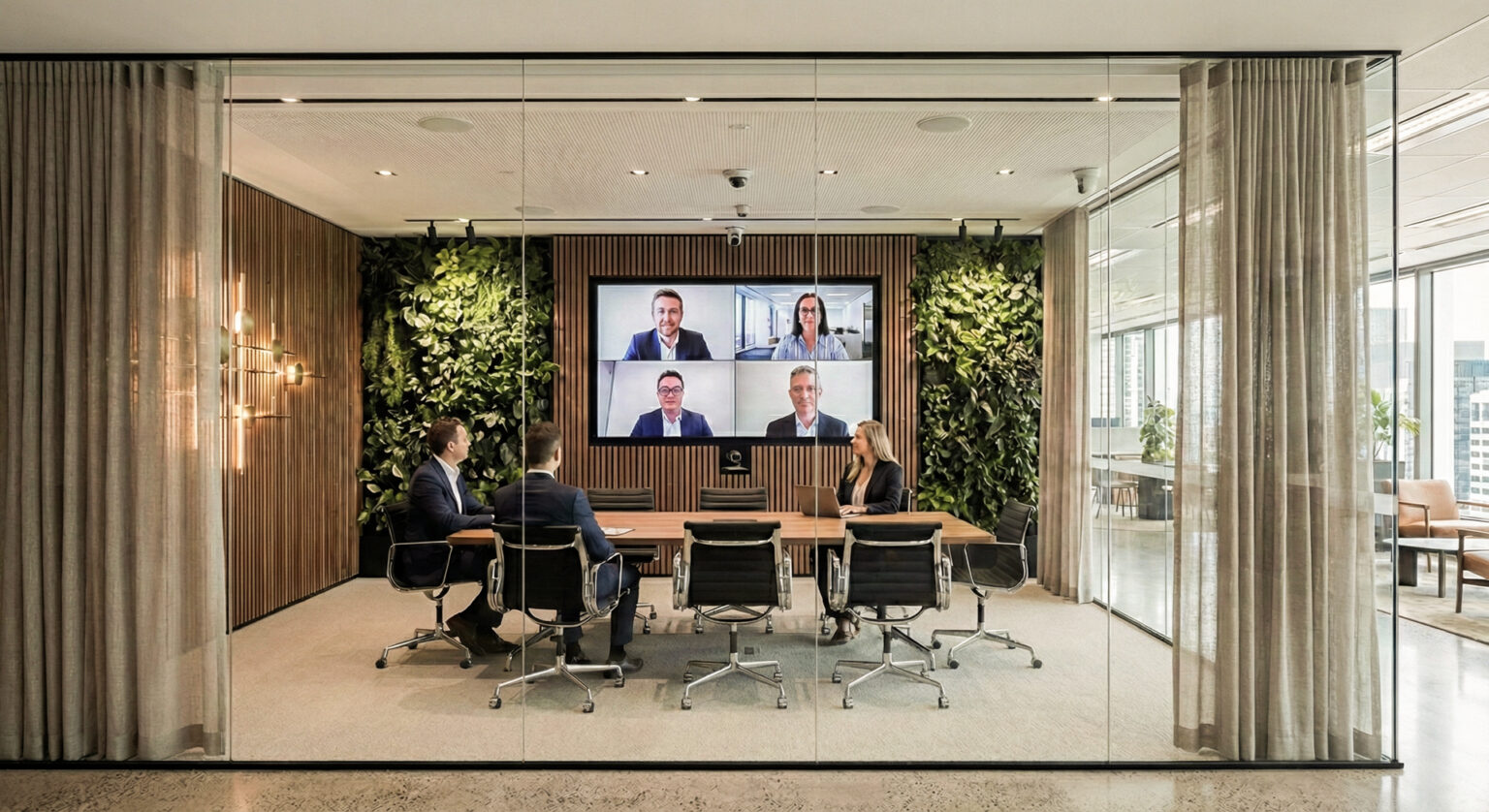
- AV integration within meeting rooms
- Acoustic treatment for hybrid meetings
If these elements are considered too late, organisations may face compromises in performance or increased installation costs.
Early infrastructure planning as part of your workplace design strategy ensures technology supports the space rather than constraining it.
Supporting Long-Term Business Growth
A workplace should not only meet current needs but also support future expansion. This is another reason early fitout decisions carry such weight.
Businesses evolve. Teams grow, departments shift, and working styles change. A well-planned fitout anticipates these changes.
Through strategic office fitout planning, organisations can design spaces that allow for:
- Flexible workstations
- Modular meeting rooms
- Adaptable collaboration areas
- Scalable technology infrastructure
Without this foresight, companies may find themselves outgrowing their workspace far sooner than expected. By contrast, a workplace designed with long-term growth in mind can adapt as the organisation evolves.

Avoiding Design Compromises
When planning is rushed or incomplete, the design process often becomes reactive. Decisions are made quickly in response to constraints rather than guided by a clear vision.
This can result in compromises such as:
- Meeting rooms that lack acoustic privacy
- Circulation paths that disrupt workflow
- Workstations positioned without sufficient natural light
- Collaboration areas located too close to focus zones
These issues may seem minor during construction, but they affect daily workplace experience.
Careful office fitout planning prevents these compromises by establishing clear priorities early. Designers and project teams can then work within a defined framework that balances aesthetics, functionality, and performance.
That’s why at Sensa, our Design stage follows the Discover process where we conduct an extensive analysis of your organisation’s needs.
Why Strategy Matters More Than Speed
A fitout delivered quickly but planned poorly can create inefficiencies that last for years. Teams may struggle with inadequate meeting spaces, poor acoustics, or layouts that disrupt collaboration.
By comparison, investing time in early fitout decisions creates a workplace that functions smoothly from day one. Strategic planning allows organisations to align spatial design with operational needs, budget constraints, and future growth objectives.
In this way, making office fitout decisions before construction become vital. The real value lies in designing a workplace that supports people, productivity, and business performance.

The Advantage of a Strategic Fitout Partner
Because early decisions carry such influence, many organisations benefit from working with a partner that prioritises office fitout planning and strategy from the outset.
A structured process ensures that office fitout decisions before construction are guided by careful analysis rather than assumptions. This approach connects business objectives, workplace behaviour, and spatial design into a cohesive plan.
When early office fitout planning is done well, construction becomes the final stage of a much larger strategic process.
Consider an end-to-end partner that ideates your workplace design strategy, makes smart office fitout decisions before construction, and delivers on their vision.
At Sensa Interiors, our Discover and Design stages cement early fitout decisions that make the Deliver stage run smoothly. Our end-to-end bespoke services result in a workplace design strategy that leads to a productive and effective office. Want to create a thoughtful office seamlessly? Contact us today.