Sustainability is No Longer Optional in Commercial Office Fit Outs Melbourne: Here's What's Changed for 2026
Sustainability is now a standard requirement in Melbourne commercial office fit outs, not an optional upgrade. Green leases bind tenants and landlords to measurable environmental targets. Low-carbon materials, low-VOC finishes, and reuse-first specification are expected from the outset. This article outlines what has changed for 2026 and what it means for your next fit out brief.
Why Sustainability is Now a Baseline Requirement in Commercial Office Fit Outs
Three years ago, a client asking for sustainable office design in Melbourne was considered forward-thinking. Today, that same request is the starting point for most commercial fit out briefs, not a sign of ambition.
The commercial property sector has seen a genuine tightening of environmental expectations. According to the Green Building Council of Australia (GBCA), the built environment accounts for approximately 25% of Australia’s greenhouse gas emissions, and the commercial sector is under growing pressure to reduce its share. Tenant demand for certified, environmentally responsible workplaces has risen sharply in Melbourne, particularly in the CBD and inner suburbs, where attracting skilled employees remains a real challenge.
For businesses planning a commercial office fit out in Melbourne, the question has shifted. It is no longer “would you like a sustainable option?” It is “here is our standard sustainable approach and these are the materials, certifications, and practices we use.”
Green leases have moved from niche to common in Melbourne’s commercial market, particularly in Premium Grade office buildings. The City of Melbourne reports that green lease arrangements have reached 94% uptake in the premium office market.

What Sustainability Standards Apply to Office Fit Outs in Melbourne in 2026
Green Star and NABERS
Two certification systems define sustainability expectations for commercial workplaces in Australia: Green Star and NABERS.
Green Star, administered by the GBCA, rates the design and construction of buildings and fit outs across categories including energy, water, materials, and indoor environment quality. In March 2026, the Green Building Council of Australia launched Green Star Fitouts, its new rating tool for the sustainable design and construction of fitouts. Green Star Interiors remains available for existing and new registrations until 30 September 2026, with all new fitout projects seeking certification required to register under Green Star Fitouts from 1 October 2026.
NABERS, the National Australian Built Environment Rating System, measures the operational environmental performance of office buildings and tenancies. Office tenancy ratings are available for Energy and Indoor Environment, while broader office building ratings can also cover water and waste. NABERS can help organisations identify opportunities to improve environmental performance and reduce operating costs.
For businesses planning a new fit out, understanding both systems from the start of the project matters. Specifying materials and systems that will support certification later is significantly cheaper than retrofitting them after construction is complete.
Green Leases Are Now Standard in Many Melbourne Commercial Buildings
A green lease is a commercial lease that includes specific environmental performance obligations for both tenant and landlord. These typically cover energy and water consumption targets, waste management practices, maintenance of sustainable building systems, and regular reporting on environmental performance.
For businesses preparing a sustainable commercial office fit out in Melbourne, reviewing the building’s green lease obligations before design begins is now a standard part of the discovery process, not an afterthought.
At the regulatory level, Victorian Government accommodation policy places specific requirements on the environmental performance of government workplaces. New government office buildings and tenancy fitouts have been subject to minimum energy performance requirements since 2021, increasing to a six star requirement from 2025, while government leases preference higher rated buildings and Green Lease Schedules.
What Materials Are Used in Sustainable Commercial Fit Outs
Low-Carbon and Low-VOC Finishes
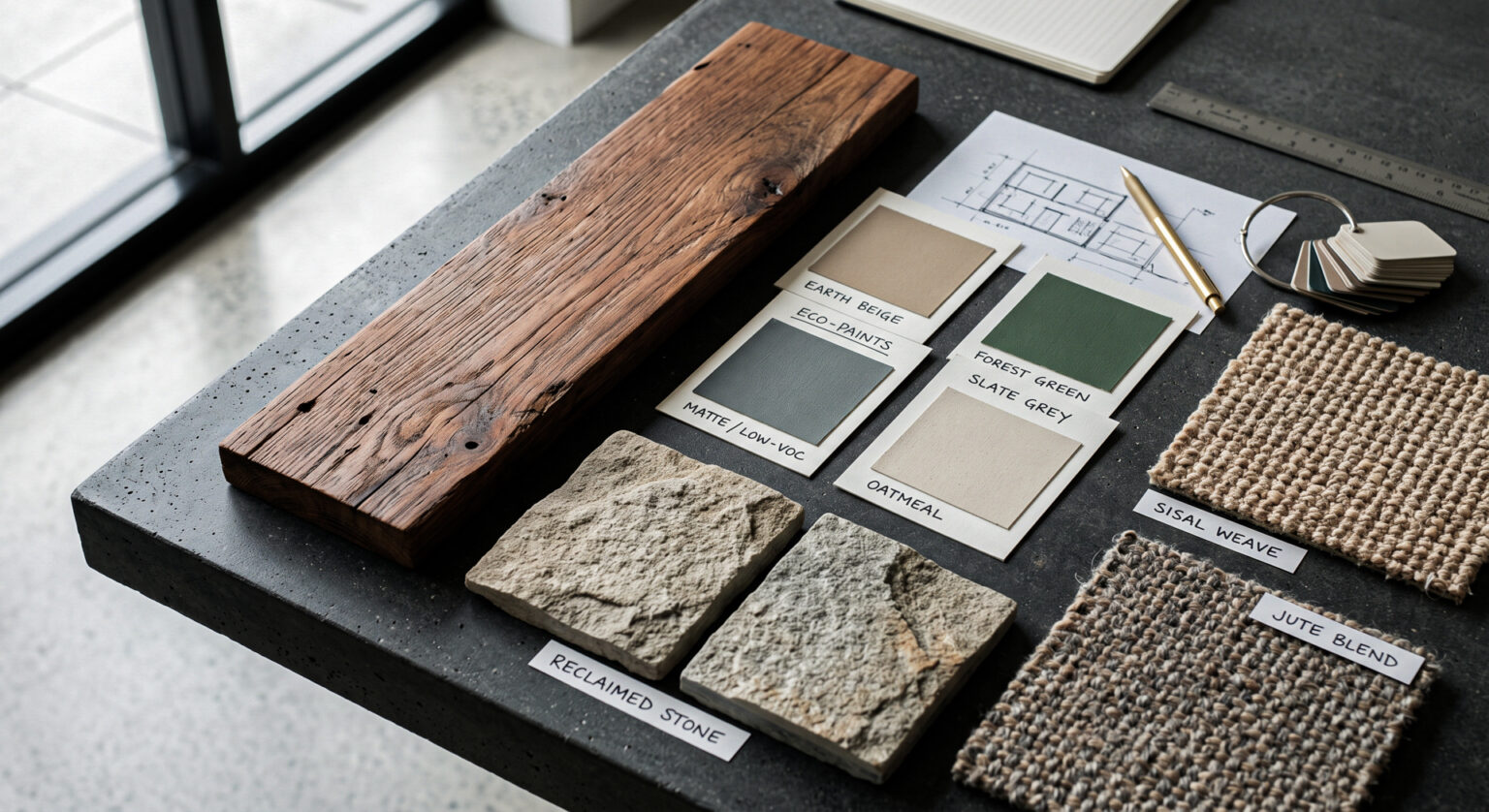
Material selection has changed considerably. Environmentally responsible workplace design now favours materials with lower embodied carbon, longer service life, and lower chemical off-gassing.
Low-VOC (volatile organic compound) paints and finishes are now standard practice in well-managed fit out projects. Poor indoor air quality affects concentration, productivity, and long-term health. Research cited by the Green Building Council has found that productivity improvements of 8 to 11% are not uncommon where better indoor air quality is achieved, although outcomes vary between workplaces. For businesses already investing in employee experience and retention, low-VOC finishes are a practical business decision, not just an environmental one.
Carpet tiles, wall finishes, and joinery materials are now increasingly selected based on Environmental Product Declarations (EPDs): standardised documents that measure the environmental impact of a product across its full life cycle. Materials with verified EPDs are increasingly considered in low carbon office fit outs, helping project teams understand and compare the environmental impacts of different products.
Reuse-First Specification
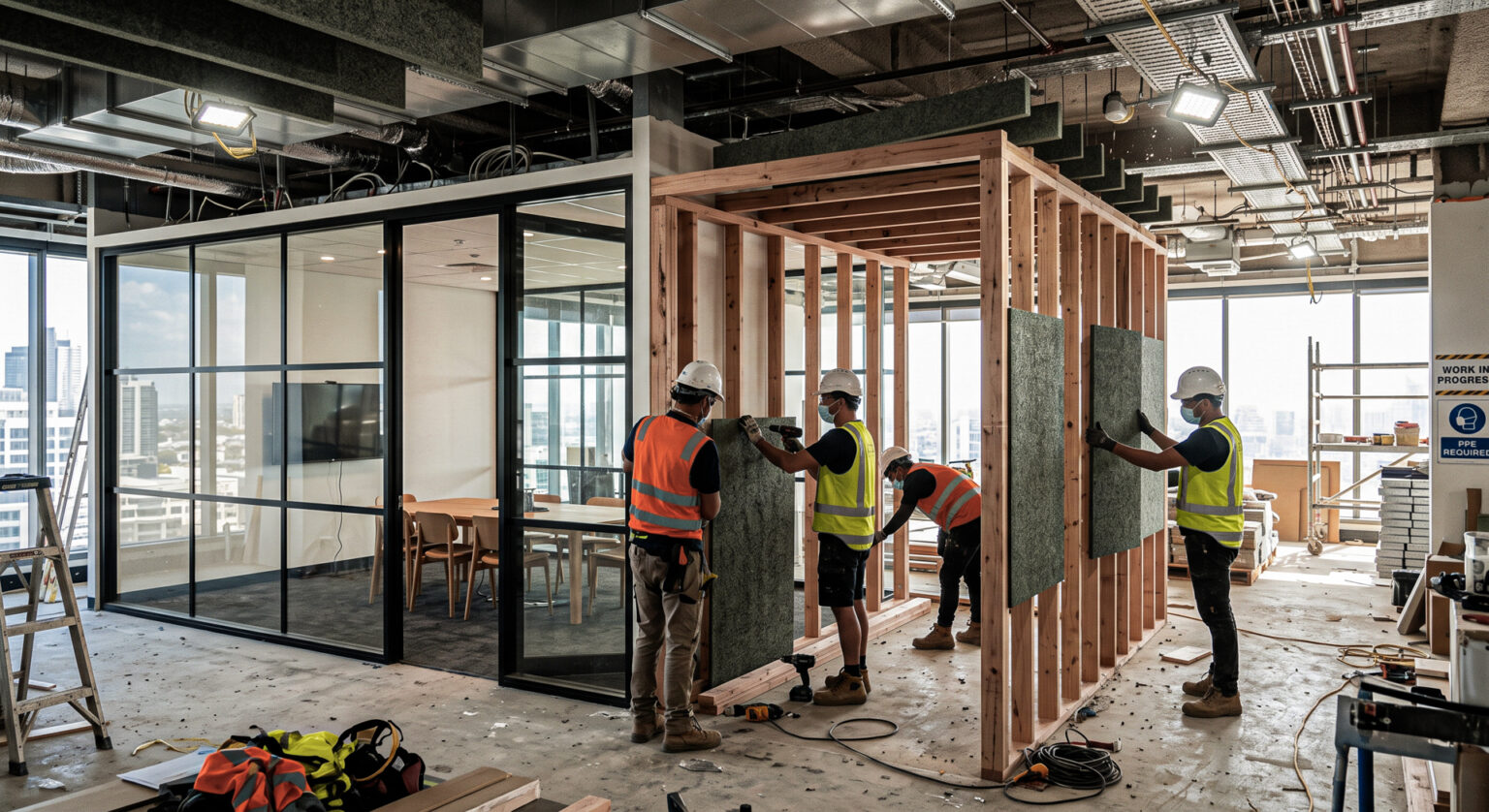
Reuse-first specification means assessing what can be retained, repurposed, or salvaged from the existing fit out before specifying anything new. Items commonly retained include existing partitioning systems, ceiling grids and tiles, flooring where condition allows, joinery and storage components, and furniture and workstations.
This approach reduces construction waste, cuts the embodied carbon of a new fit out, and in many cases reduces overall project costs. The shift to reuse-first reflects a broader change in how eco-friendly commercial fitout materials are now being approached. Rather than treating a new fit out as a clean-slate project, experienced teams now treat the existing built environment as a resource, one with real environmental and commercial value.
For businesses with existing assets in reasonable condition, a reuse-first assessment at the start of the project can recover significant value while supporting genuine environmental goals.
Does a Sustainable Office Fit Out Cost More?
This is the question most business leaders ask first. The answer depends on where you look.
Some sustainable materials carry a small premium over their conventional equivalents. This is true of certain low-carbon timber products, high-performance glazing, and carpet ranges with verified environmental credentials. However, reuse-first approaches can reduce demolition and new material costs substantially.
Buildings with strong NABERS ratings typically have lower ongoing energy costs. Well-specified indoor environments can reduce employee absenteeism and improve concentration, both of which have measurable business value.
According to the World Green Building Council, green buildings can deliver financial benefits through lower operating costs and improved marketability and asset value, while well designed indoor environments can also support workplace productivity. A sustainable commercial office fit out in Melbourne is an investment in long-term operational efficiency, not a premium for its own sake.
The more useful question is not “how much more does sustainability cost?” It is “how do I plan the project so sustainability is incorporated from the start, rather than negotiated in at additional cost later?” Retrofit environmental requirements into a finalised design and the costs increase. Build them into the discovery and planning phase, and additional costs can often be reduced or avoided.
You can see how this approach applies to real projects on Sensa Interiors’ office fitouts Melbourne page, which covers the full Discover, Design, Deliver methodology across different industries and project types.
How Sensa Interiors Approaches Sustainable Office Design Melbourne 2026
Sensa Interiors has incorporated sustainability as an integrated component of its project approach for many years, long before it became a standard client expectation.
Rather than offering sustainability as a tiered option, Sensa builds environmental considerations into the SensaARC Discover phase. Material selection, building certification requirements, green lease obligations, and reuse assessments are addressed before design development begins. Clients are not presented with a sustainable version of their fit out as an alternative proposal. It is simply how the project is planned from day one.
For businesses planning a fit out project in 2026, the baseline has changed. Green leases, low-VOC finishes, reuse-first specification, and building certification pathways are now the expected standard. Working with a fit out partner who understands this and incorporates it consistently is one of the most direct ways to avoid costly design changes later in the project.
Explore Sensa Interiors’ full commercial office fitout service to see how the sustainability-led approach applies across different industries and project scales. For more on workplace design trends in 2026, visit the insights page.
Frequently Asked Questions
Why is sustainability now required in commercial office fit outs in Melbourne?
Green leases, updated building codes, and growing tenant demand have moved sustainability from a preference to a standard requirement. Many Melbourne commercial buildings now include specific environmental performance obligations in lease agreements. Green Star and NABERS have become widely used sustainability frameworks in commercial workplace projects, with landlords and tenants increasingly considering environmental performance from the outset.
What sustainability standards apply to commercial office fit outs in Australia in 2026?
The two main frameworks are Green Star and NABERS. In March 2026, the Green Building Council of Australia launched Green Star Fitouts, which replaces Green Star Interiors for new fitout projects seeking certification from 1 October 2026. NABERS measures operational environmental performance once a workplace is occupied. The National Construction Code also contains energy efficiency requirements relevant to commercial buildings, while Victorian Government workplaces are subject to additional energy performance and Green Lease requirements.
What eco-friendly commercial fitout materials are commonly used in sustainable fit outs?
Sustainable commercial fit outs typically specify low-VOC paints and finishes, materials backed by Environmental Product Declarations (EPDs), recycled or reclaimed content, and products with long service lives that reduce replacement frequency. Reuse-first specification, which retains and repurposes existing fit out components before ordering new materials, is now a standard starting point for environmentally responsible workplace design in Melbourne.
Does a sustainable commercial office fit out cost more than a conventional one?
Not necessarily. Some individual products carry a small premium, but reuse-first approaches and integrated planning from the project’s discovery phase can offset or eliminate that cost. Sustainable fit outs also deliver long-term savings through lower energy costs and better indoor environment quality. The key is incorporating sustainability requirements early, rather than adding them to a design that was planned without them.
How do I know if my Melbourne office building has a green lease?
Your commercial lease documents will specify whether environmental performance obligations apply to your tenancy. If you are unsure, ask your property manager or legal adviser to review your lease before the fit out brief is finalised. Green leases are now common across Melbourne’s premium office market, so understanding those obligations early can help avoid design changes and additional costs later in the project.