How Commercial Building Grades Affect Office Fitout Costs in Melbourne
In Melbourne, building grade can reveal a lot about how well a property will support your workplace, from floor plate size, quality of services and amenities to the potential cost of making the tenancy work.
The Property Council of Australia’s building quality guide uses grades such as Premium, A Grade and B Grade as a market-based way to assess building quality. It considers things such as location, building services, lifts, amenities, management, sustainability, technology and overall building performance.
For businesses assessing a new office, these details can make a significant difference. A tenancy may have the right size and location, but if the broader building conditions do not align with how your business needs to operate, the office fitout can quickly become more complex, more expensive or more compromised than expected.
What building grade means for your workplace
Premium Grade buildings
Premium Grade buildings are usually the landmark office assets in the Melbourne CBD.
They often provide efficient floor plates, high-quality lobbies, strong end-of-trip facilities, high speed lifts, modern building services, strong sustainability credentials and a polished arrival experience.
From an employee experience perspective, these buildings can offer a lot. They create a strong first impression for clients, visitors and staff. They often support better comfort, better amenity and a more premium workplace environment.
But they also come with higher expectations.
A fitout in a Premium Grade building often needs to align with the standard of the building. Finishes, front-of-house areas, meeting rooms, technology, furniture and client-facing spaces usually need to be carefully considered.
There may also be more detailed landlord fitout guidelines, stricter building rules and more complex services coordination.
The benefit is that the base building often gives you a stronger platform to work from. Your fitout budget can focus more on creating the right workplace, rather than solving base building limitations.
A Grade buildings
A Grade buildings often provide a strong balance between quality, cost and workplace performance.
They usually have good building services with front desk concierge, professional common areas, reliable lifts, quality amenities and better planning flexibility than many older assets.
For many Melbourne businesses, A Grade is a practical choice. It can support a high-quality workplace without necessarily carrying the full cost profile of a Premium Grade building.
From a fitout perspective, A Grade buildings can also be more predictable. The base building services are generally better equipped to support modern workplace requirements such as meeting rooms, quiet rooms, breakout spaces, collaboration zones and hybrid working technology.
There can still be limitations, depending on the specific building and tenancy condition. But in many cases, A Grade buildings give businesses a strong starting point with fewer compromises.
B Grade buildings
B Grade buildings can be attractive because they may offer lower rent, better incentives or a more affordable entry point into the Melbourne CBD.
But they need to be assessed carefully.
Some B Grade buildings are well maintained and have been upgraded over time. Others may have dated services, less efficient floorplates, older amenities or limited end-of-trip facilities if any.
This can have a direct impact on your fitout cost.
If the building’s HVAC, lighting, fire services, access, amenities or floorplate do not support your workplace requirements, the fitout may need additional work to bring the space up to standard.
That is where hidden costs can appear.
A lower rent may look appealing at the beginning, but if the tenancy requires significant upgrades, the overall project cost can change quickly.
Where employee experience can be compromised
A workplace is not experienced only within the tenancy.
Employees experience the building from the moment they arrive.
That includes the lobby, lifts, bathrooms, end-of-trip facilities, air quality, natural light, temperature, acoustics and shared amenities.
These details shape how people feel at work.
Arrival experience
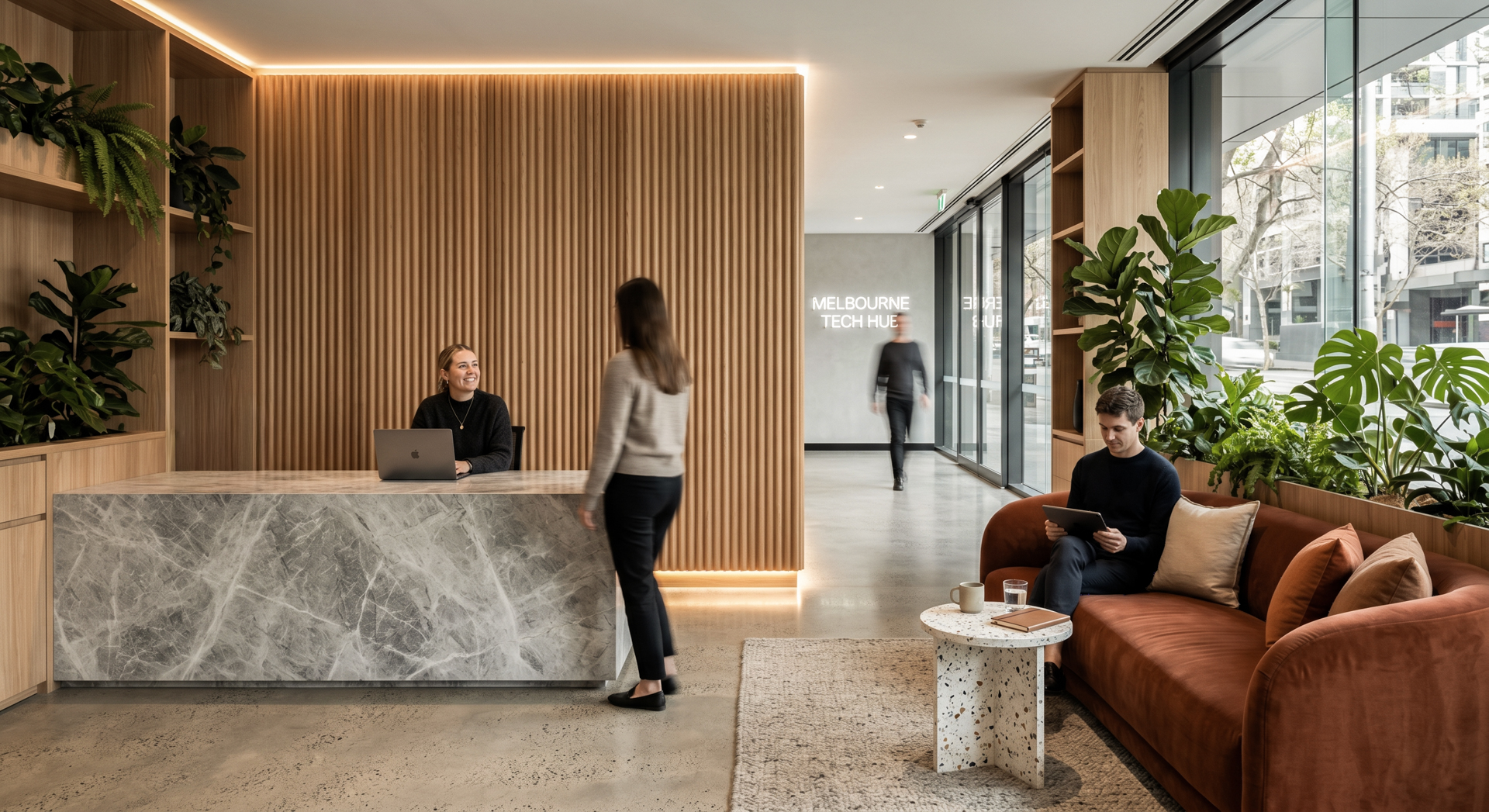
Premium and A Grade buildings generally provide a stronger arrival experience. The lobby, concierge, security, lifts and shared areas usually feel more polished and professional.
In a B Grade building, the fitout may look great once people arrive at your tenancy. But if the shared areas feel tired or poorly maintained, that can affect the overall impression of the workplace.
Comfort and air quality
Thermal comfort is one of the most important parts of employee experience.
If the building’s mechanical systems are dated or limited, staff may experience hot and cold zones, stuffy meeting rooms or inconsistent airflow.
This is especially important in modern workplaces where businesses need enclosed meeting rooms, focus rooms, collaboration spaces and video call areas.
A well-designed fitout still relies on the base building to perform.
Natural light and planning flexibility
The quality of the floorplate has a major impact on the workplace.
An efficient floorplate with good natural light can support better planning, stronger visibility, more flexible work settings and a more comfortable environment which improves team morale.
Older buildings may have deeper floorplates with a central core, more columns or shared amenities between multiple levels. These can limit what is possible and may force compromises in layout, room placement or workstation planning.
Amenities and wellbeing
End-of-trip facilities, bathrooms, shared lounges, outdoor areas and food & beverage options all contribute to the broader workplace experience.
These features are becoming more important as businesses look for ways to make the office more attractive and purposeful.
If the building does not provide these amenities, the tenancy may need to work harder to create a positive staff experience.
Technology and hybrid working
Modern workplaces rely on reliable technology.
Meeting rooms need to support video calls. Teams need strong connectivity. Spaces need to support both in-person and remote collaboration.
Most updated Premium and A Grade buildings have a dedicated fibre optic internet connection into the premises ensuring a large bandwidth. Modern high rises often have their own telecommunication receiver for seamless 5G connection.
In some older buildings, additional work may be required to support power, data, AV, acoustics and communication infrastructure.
This does not always make the building unsuitable. But it does need to be understood early.

The key trade-off
The decision is not simply about choosing the most expensive or most affordable building.
It is about understanding what the building allows you to achieve.
A Premium Grade building may come with a higher rental commitment, but it can offer a stronger platform for employee experience, client presentation and workplace performance.
An A Grade building can often provide the right balance of quality, flexibility and cost.
A B Grade building may offer commercial value, but it needs to be tested carefully against the requirements of your people, your operations and your future workplace.
The risk is making the decision based on rent and floor area alone.
That is where many businesses get caught.
What to assess before committing to a building
Before signing a lease or progressing too far with a property, businesses should understand whether the building can support the workplace they need.
Key questions include:
- Can the floorplate support the required number of people and work settings?
- Does the HVAC support meeting rooms, focus rooms and enclosed spaces?
- Are the lifts, bathrooms and shared areas suitable for staff and clients?
- Are the end-of-trip facilities aligned with employee expectations?
- Is there enough natural light to support a quality workplace environment?
- Will the ceiling height and column layout restrict the design?
- Are there hidden services, compliance or upgrade costs?
- Will the building help people want to come into the office?
These questions need to be answered before major workplace decisions are made.
Bottom Line
Building grade has a direct impact on office fitout cost, but the bigger impact is on workplace performance.
Premium or Grade buildings may cost more upfront, but support a stronger employee experience. B Grade buildings may offer commercial savings, but those savings need to be tested against the cost of upgrades, operational limitations and the experience your people will have every day.
For Melbourne businesses, the smartest approach is to assess the building and the fitout together. The tenancy is only one part of the decision. The base building, services, amenities and employee experience will all influence whether the workplace actually works.
At Sensa, we help you establish a clear workplace strategy before key property decisions are made. As part of your property search, we can provide complimentary test fits to assess whether a tenancy aligns with your people, your budget and your relocation timeline. This gives you greater clarity on what is possible before you commit to a space.