12 Office Design Considerations that Increase Productivity at Work
You’ve recently purchased a new office space and you’re planning the big move. As your to-do list continues to grow, many questions spring to mind.
How will you design your floor plan? What office furniture should you buy? How can you encourage team productivity in the new space?
Thoughtful office design and construction is not just about aesthetics. It shapes collaboration, focus, wellbeing, and long-term performance. When done well, it supports how your people operate.
Below are twelve practical considerations to guide your next workplace project.
1. Plan the Layout Around How Your Team Works
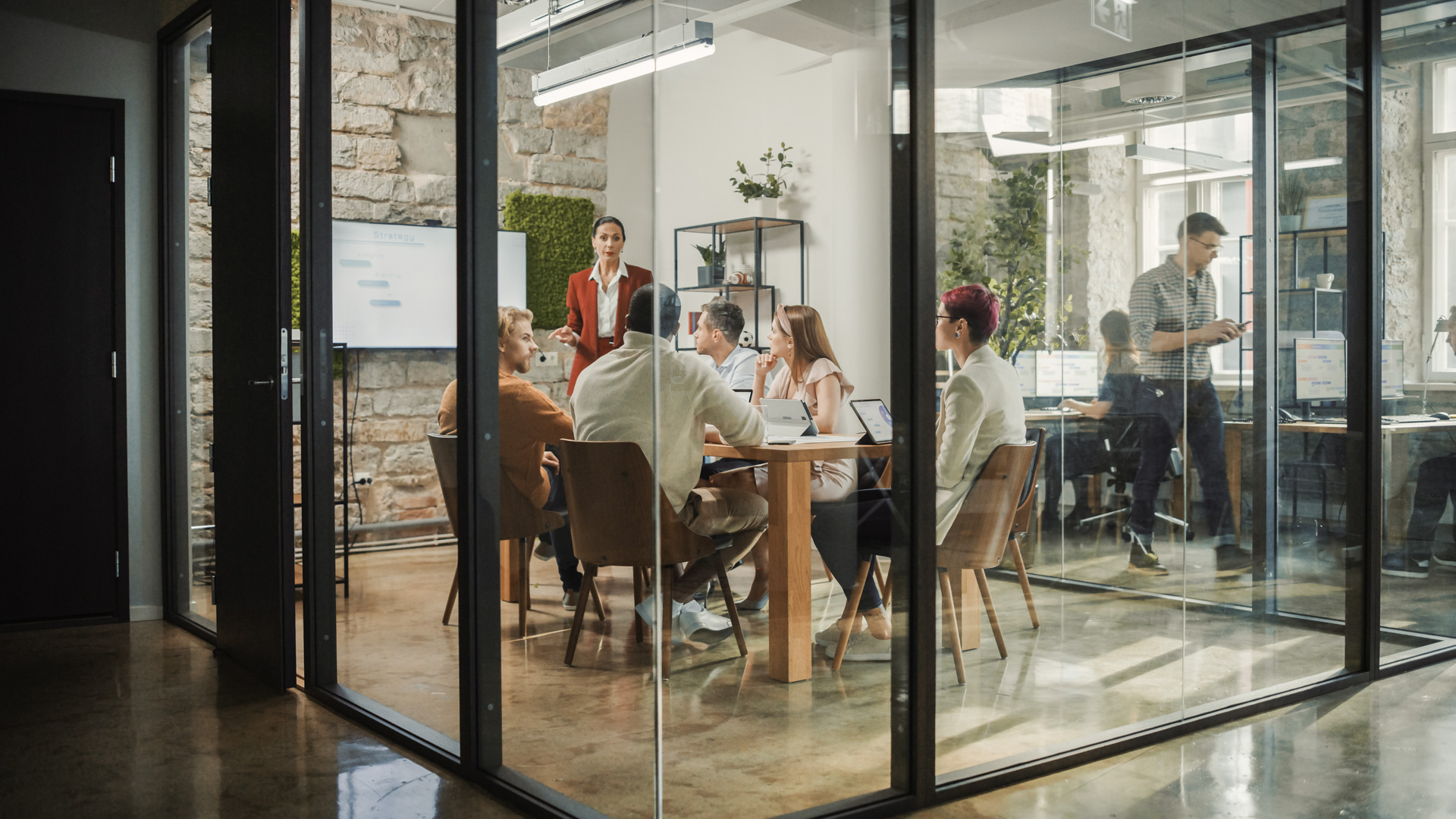
As more organisations switch their focus to collaborative teamwork, office cubicles have declined in popularity. Instead, they’ve been replaced by open floor plans that promote more movement and allow team members to work side-by-side.
While open floor plans can encourage collaboration, they must be purposeful. During the office design and construction phase, analyse how different teams interact. Consider:
- Which departments need regular collaboration
- Who requires quiet focus time
- Where informal conversations naturally happen
Instead of rows of identical desks, combine:
- Open bench seating
- Community sofas
- Small breakout zones
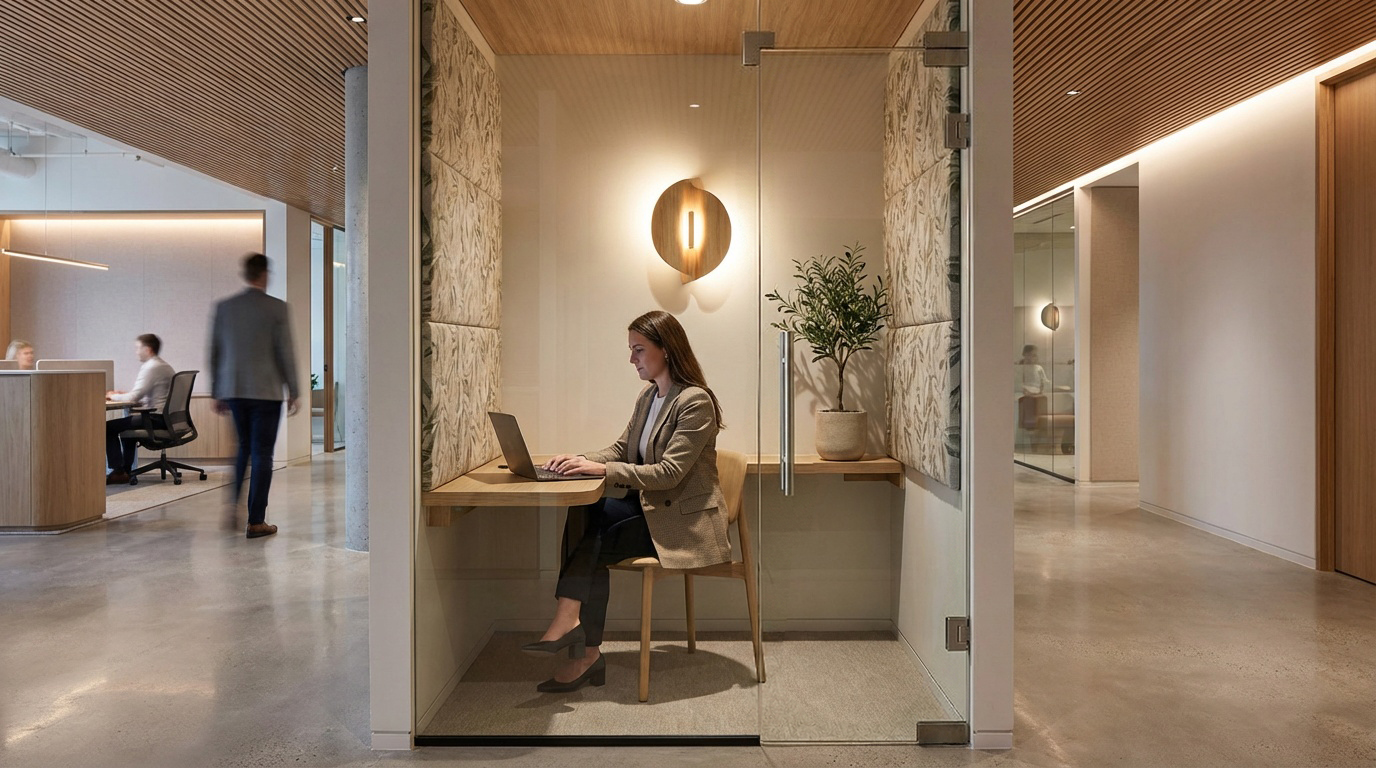
- Quiet focus pods
- Room dividers
- Team recreation areas
Effective workplace design balances collaboration with concentration. Open floor plans encourage team centricity by allowing various departments to interact with one another throughout the day.
2. Reduce Visual and Physical Clutter
Clutter creates cognitive load. Clean, organised spaces allow clearer thinking.
Incorporate integrated storage into your office design and construction plan, such as:
- Built-in cabinetry
- Lockers for hybrid teams
- Cable management systems
- Concealed joinery solutions
Moving processes online also reduces paper storage needs. A streamlined office layout supports efficiency.
3. Allow Natural Lighting
Studies show that daylight in the workplace is associated with a 15% reduction in absenteeism. There’s a correlation between natural office lighting, employee satisfaction, and team productivity.
Position workstations near windows during your office planning stage. Keep shades open throughout the day to maximise as much light as possible. Use sheer blinds to manage glare without blocking daylight. If used in moderation, the usage of mirrors also creates more natural light for team members in alternative locations.
Well-considered lighting design is a core component of modern office design and construction, combining:
- Natural light
- Layered task lighting
- Ambient lighting
- Acoustic lighting solutions
4. Incorporate the Outdoors
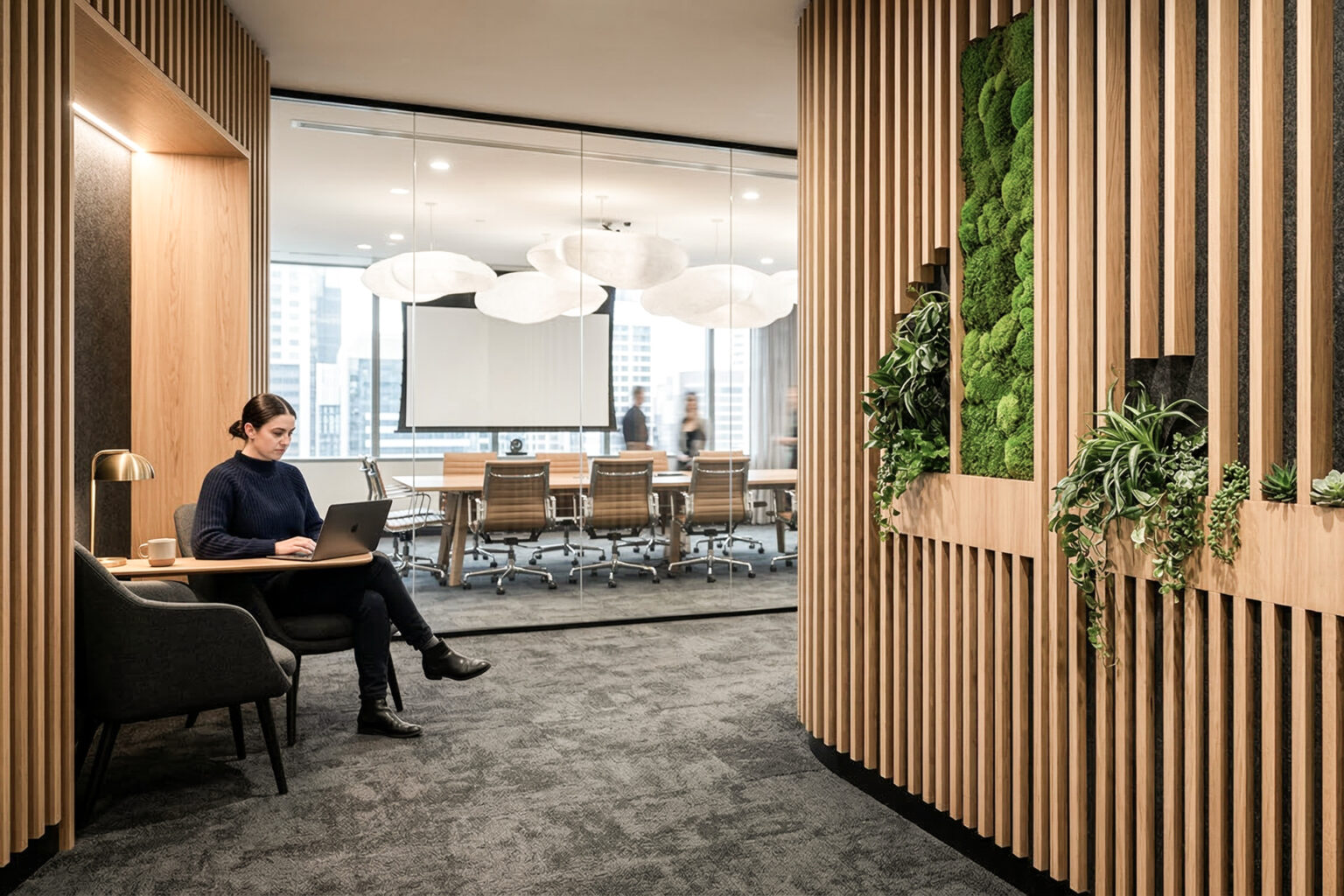
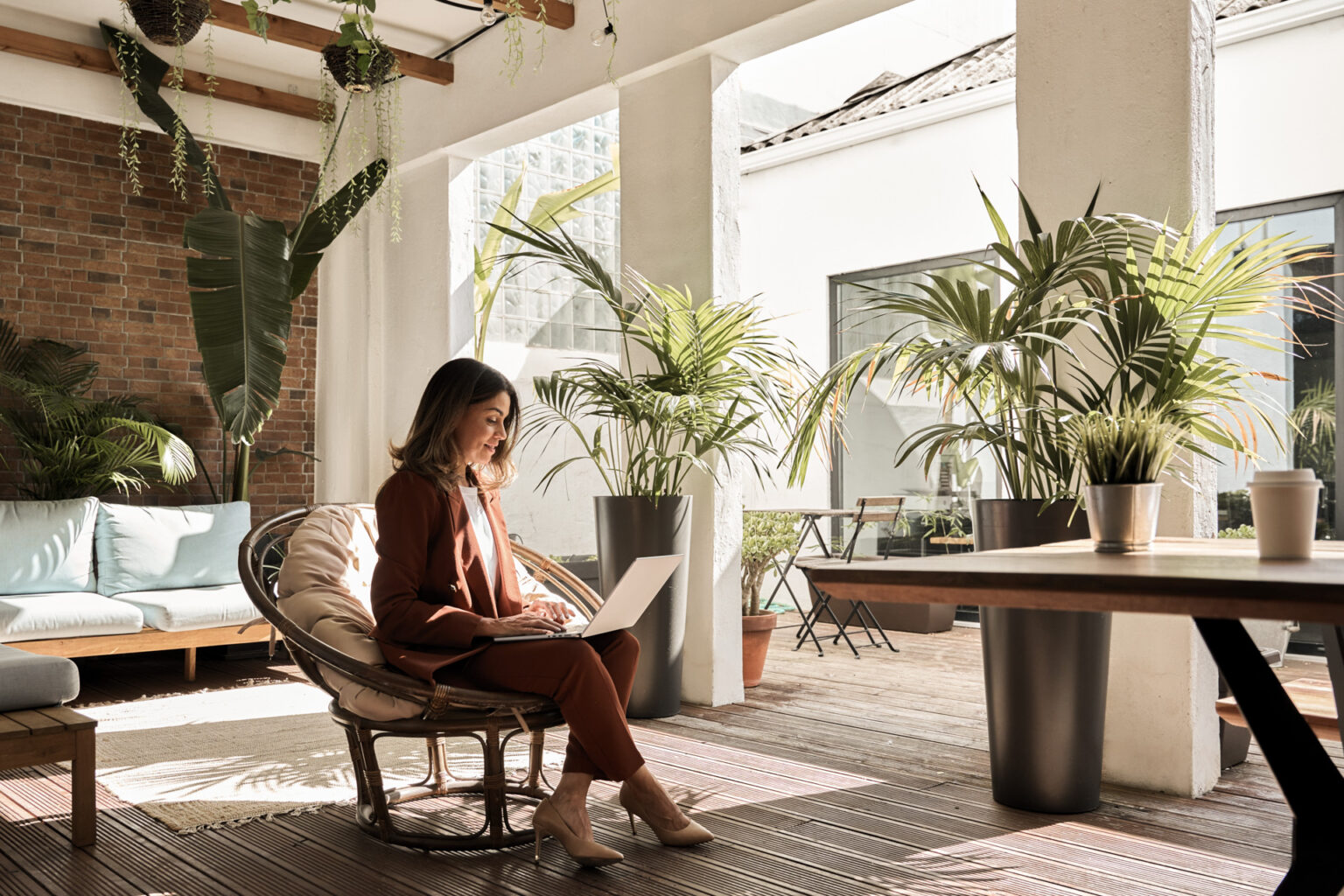
In addition to natural lighting, use plants to further promote the outdoors. Plants will help clean and purify the air while brightening up your office space. A study found that approximately 72% of the respondents feel more vigilant and efficient in a biophilic space.
Select low-maintenance plants that you can easily care for. Avoid heavy pollinated plants that can cause allergic reactions. Consider the following plant types:
- Snake plant
- Aloe vera
- Oxalis
- ZZ plants
Incorporating biophilic principles during office design and construction strengthens the connection between people and their environment.
5. Choose Colours Strategically
The colour theme of your office should be a key part of your office design considerations, due to its psychological impact. The following colours are often most effective for productivity:
Blue
Blue represents calmness, patience, and honesty. Incorporate lighter shades of blue to help employees feel content and focused.
Green
Light green promotes balance, nature, and stability. Green also takes little to no vision adjustments, which makes it ideal for team members who work long hours.
Yellow
If you operate a creative-based practice, yellow is the colour that’s most associated with creativity. It’s also known for positivity, excitement, and confidence.
Rather than applying one colour everywhere, zone your office using subtle tonal changes. This approach supports both branding and productivity.
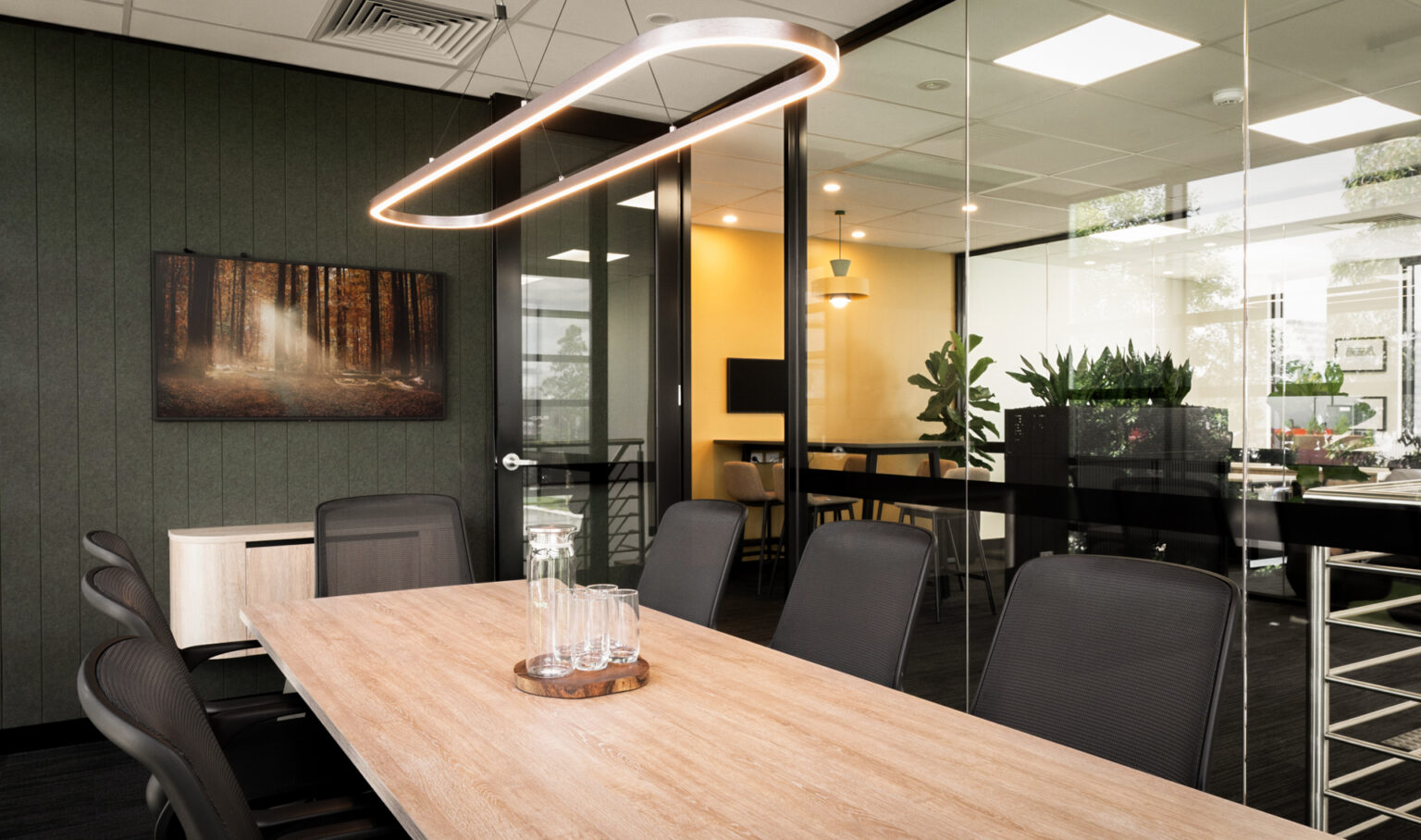
6. Use Designated Meeting Rooms
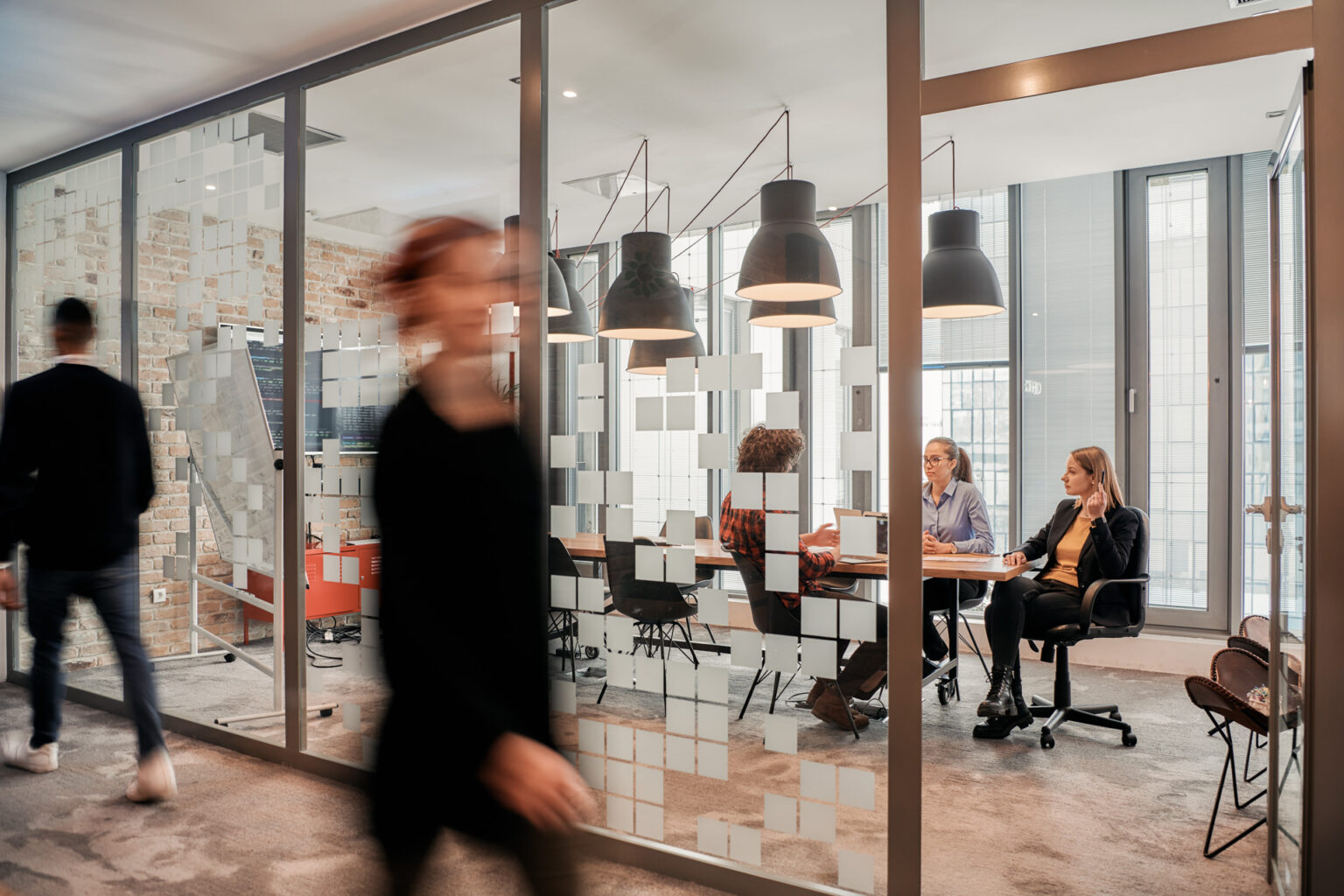
Help increase your productivity at work by creating designated meeting rooms. Consider both your company size and individual department sizes to determine the appropriate number of meeting rooms.
Ensure that there are also enough conference rooms to go around, based on your company’s meeting cadence. To avoid confusion, grant your team access to a conference room booking system.
7. Minimise Noise
Excessive noise can be a large hindrance to easily-distracted team members. Instead, designate specific office areas for social interactions and autonomous work.
During office design and construction, plan for:
- Formal boardrooms
- Small huddle rooms
- Virtual meeting spaces
- Informal collaboration booths
Include integrated technology such as video conferencing systems and acoustic treatments to avoid disruption.

8. Prioritise Air Quality and Ventilation
Air quality directly impacts concentration and comfort.
Best practice commercial fitout strategies include:
- Routine HVAC maintenance
- Proper airflow zoning
- Fresh air integration
- Avoiding blocked vents
On top of that, select a signature office scent. Steer clear of strong sugary scents, as these can overpower the workspace. Instead, try the following:
Citrus
Citrus has been linked to more physical energy and alertness. This will inspire proactive behaviours and increased team productivity.
Ginger
Ginger is known to combat fatigue. This scent is especially beneficial during dreary weather, lengthy meetings, or after-hour projects when employees often feel the most fatigued.
Lavender
Lavender is an excellent option for increasing concentration levels and reducing stress. This scent is also linked to mild pain reduction.
Scenting can be subtle and controlled, but ventilation and filtration systems should always take priority.
9. Incorporate Sit-Stand Workstations
Ergonomics is central to effective office design and construction.
Sit-stand desks encourage movement and reduce prolonged sitting. Complement them with:
- Ergonomic task chairs
- Monitor arms
- Adjustable keyboard trays
Investing in ergonomic office furniture supports long-term health and reduces workplace discomfort.
10. Display Artwork and Photographs
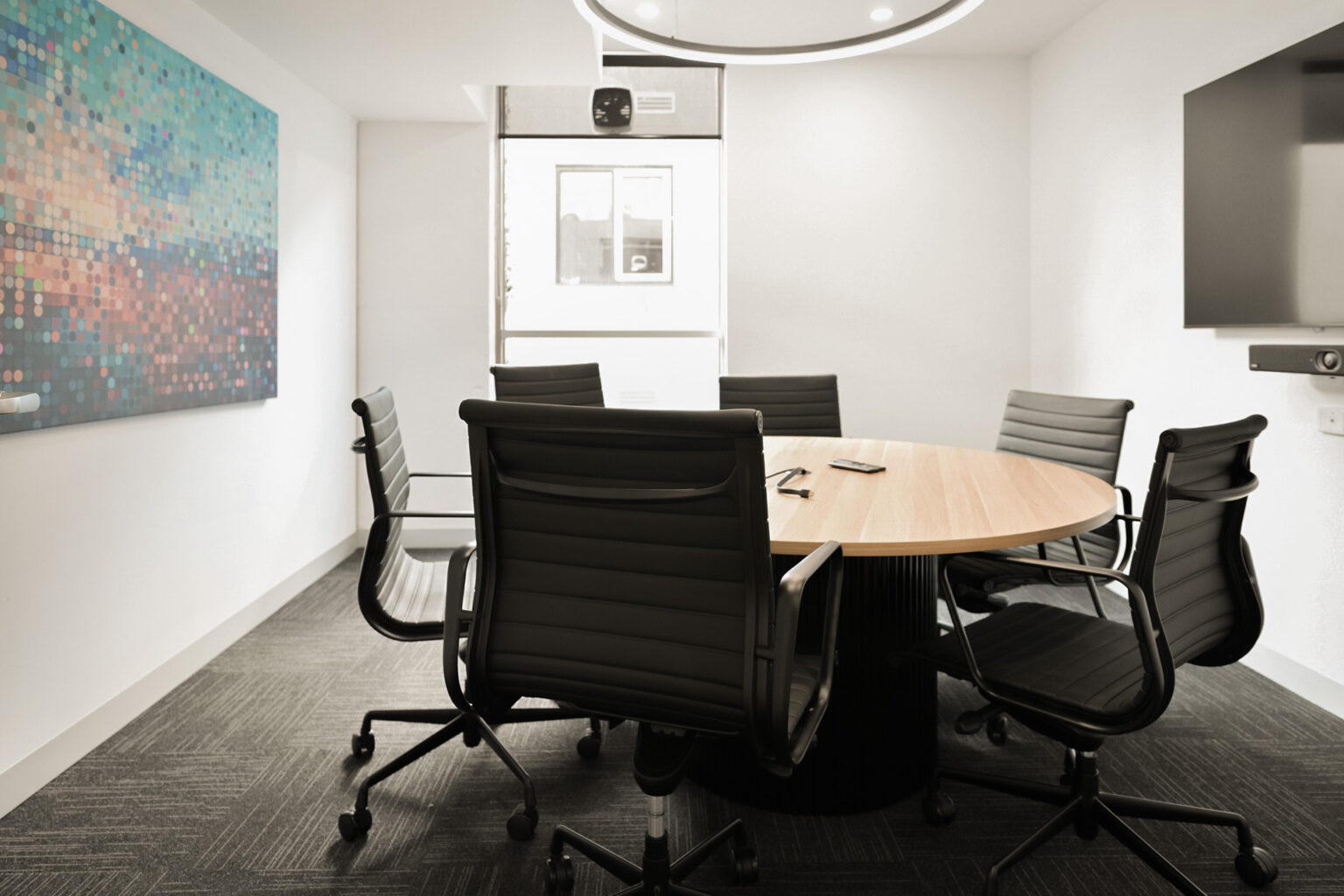
Allow your team to personalize their workspaces with family photographs to add a touch-of-home. You can incorporate wall art as well to brighten up shared spaces and lower stress levels.
Select artwork that demonstrates your brand mission and company culture. Showcase your mission statement as wall art in a prominent spot of your office for high visibility. Positive affirmations also make for impactful wall art in the workplace.
11. Showcase Your Team
Showcase your team’s accomplishments throughout your office in high-traffic areas. Has your team recently won an award or achieved a new milestone? Has your organization been recognized in the media?
Celebrate these milestones in high-traffic areas.
Display:
- Awards
- Project highlights
- Media features
- Team photography
This strengthens internal pride and reinforces organisational values.
Choose Sensa Interiors for Thoughtful Office Design and Construction
Sensa Interiors has been providing office interior design and construction services for over forty years, offering everything from workspace planning, interior design, and construction as well as furniture supply and installation. Our bespoke office fitouts consider your organisation’s unique needs to create a space that works best for you.
Contact us today to speak to our team of consultants.