What the Best Office Fit Out Companies are Being Asked to Solve in 2026
Businesses are no longer approaching workplace projects with a simple design brief. They are expecting office fit out companies in Melbourne to solve broader challenges, from supporting hybrid work and improving employee experience to planning for future growth and integrating technology from the outset.
This article explores the office fitout trends 2026 that are reshaping workplace expectations and why strategic thinking has become just as important as design expertise.
Why the Brief has Changed
A few years ago, many workplace projects focused on creating attractive, functional offices. While those priorities remain important, businesses are now asking much more of their workplace investment.
According to CBRE’s 2025 Australian Office Occupier Survey, average peak office utilisation sits at 67%. Desk sharing has increased with an average of 0.7 desks per employee for Australian tenants. This reflects the continued evolution of workplace attendance, prompting many organisations to rethink how their offices support collaboration, flexibility and business performance.
As workplace attendance becomes more dynamic, the focus shifts from accommodating more desks to creating spaces that are used more effectively. Businesses are looking for workplaces that better reflect how their people actually work.
This means an office can no longer be designed around permanently assigned desks alone. Every space needs to support how people actually work throughout the day.
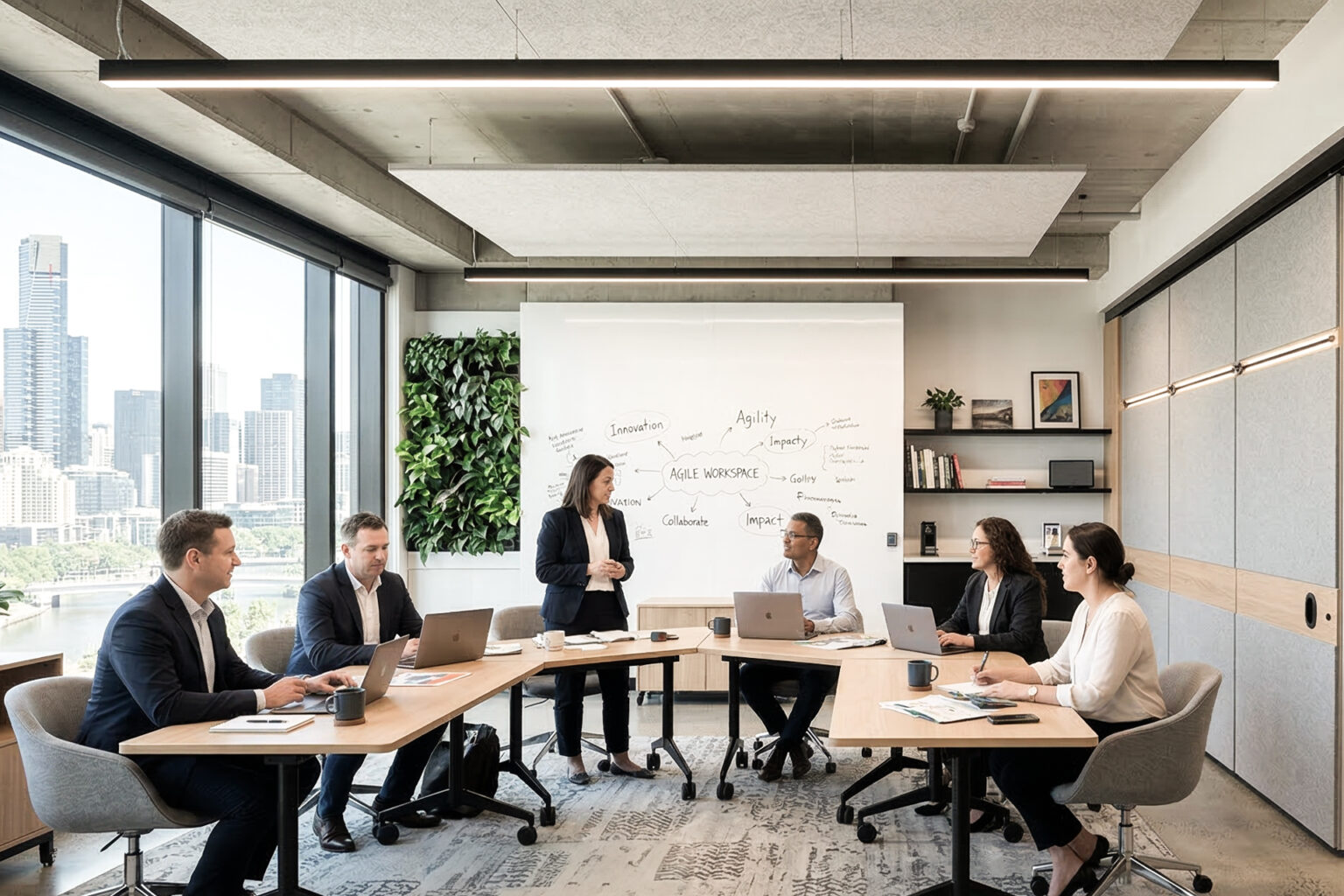
What Businesses Are Asking Melbourne Office Fit Out Companies to Solve
Supporting Hybrid Work From Day One
Hybrid work is no longer treated as a temporary adjustment. Instead, businesses are asking how their workplace can encourage employees back into the office while still supporting flexible work arrangements.
As a result, businesses are prioritising hybrid work office design across Australia from the earliest planning stages.
Rather than simply reducing desk numbers, organisations are asking questions such as:
- How often will teams work together in person?
- Which activities require dedicated collaboration spaces?
- Where should quiet work areas be located?
- How can technology support seamless meetings between remote and office-based employees?
These questions shape workplace strategy long before layouts are developed.
Designing Around Activities Instead of Departments
Another significant shift is the move towards activity-based workplace planning. Rather than allocating space according to organisational structure, businesses are increasingly designing environments around the tasks employees perform throughout the day.
This includes focus rooms for concentrated work, collaboration spaces for project teams, informal meeting areas, quiet booths for virtual meetings, and flexible touchdown spaces for visiting employees.
The approach reflects some of the biggest Office Fitout Trends of 2026, where workplace performance is measured by how effectively spaces support different activities instead of simply accommodating headcount.
Integrating Technology Before Construction Begins
Modern workplaces rely on integrated systems that support collaboration, booking platforms, audiovisual technology, wireless connectivity, occupancy monitoring, and smart building management.
Planning these requirements early avoids expensive changes later in the project.
For experienced office fit out companies in Melbourne, technology planning now sits alongside workplace strategy, ensuring digital infrastructure supports both current operations and future business needs.
Planning for Growth Rather Than Today’s Headcount
Business requirements rarely remain static. Organisations continue to evolve through recruitment, restructuring, acquisitions, and changing customer expectations.
Rather than designing purely for today’s workforce, businesses are increasingly seeking workplaces that remain adaptable over the next five to ten years. This has made flexibility one of the defining characteristics of modern office fitout projects in Melbourne.
Movable partitions, adaptable meeting spaces, modular furniture, and scalable technology all help businesses respond to future change without requiring major workplace upgrades.
Improving Employee Experience
Many organisations now recognise that workplace design influences more than productivity. The workplace also affects employee wellbeing, collaboration, engagement, and retention.
Employees value environments that provide choice, comfort, access to natural light, acoustic control, and spaces that support different working styles. Rather than asking for impressive office features, businesses are increasingly asking how workplace decisions can improve the everyday employee experience.
This is where workplace strategy across Melbourne has become an important part of the conversation, helping businesses align workplace decisions with organisational objectives instead of short-term design trends.
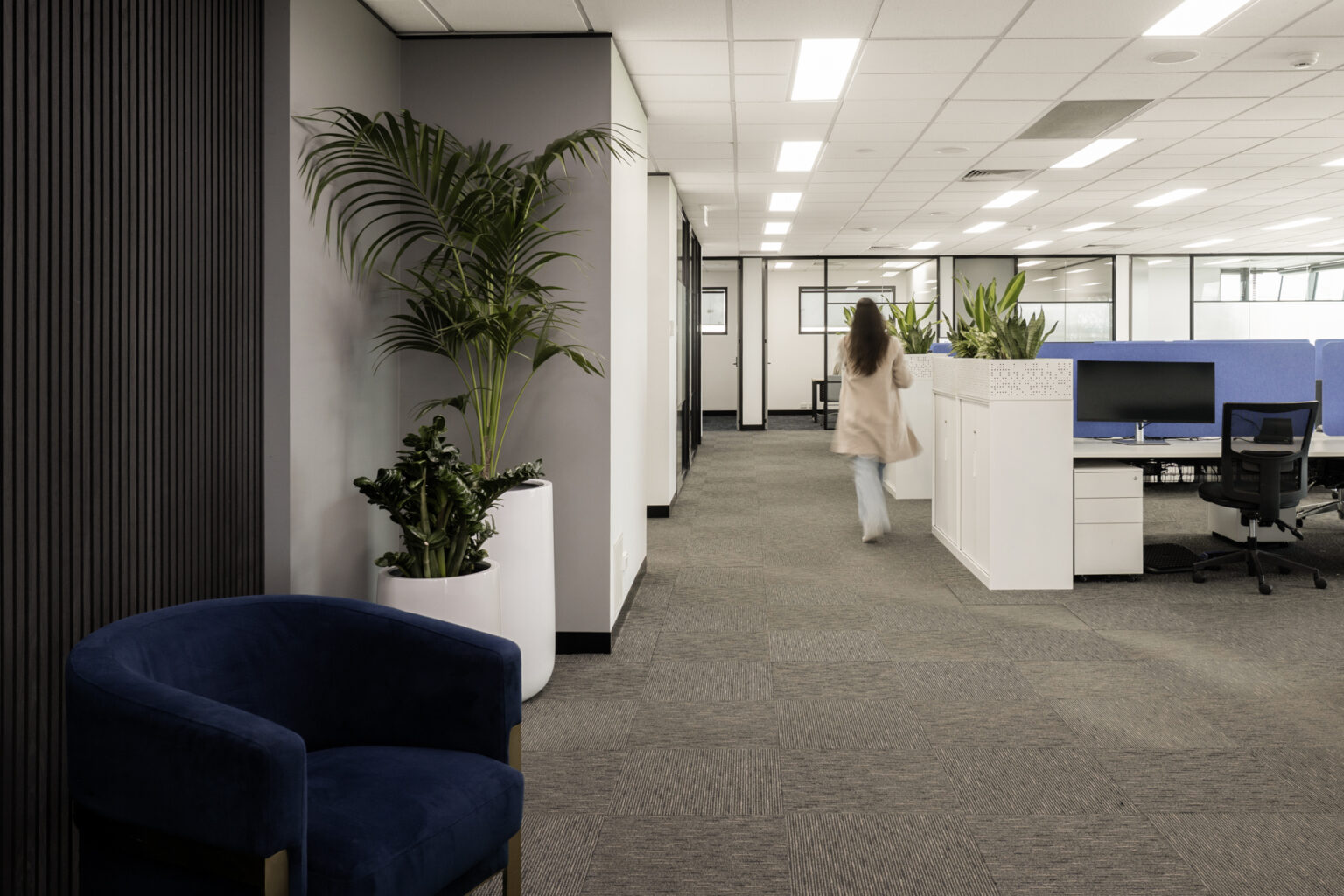
Why Business Strategy is Driving Office Fitout Trends in 2026
The biggest workplace changes are not being driven by furniture, finishes, or aesthetics alone.
They are being driven by broader business priorities, including:
- Supporting hybrid work without reducing collaboration.
- Creating workplaces that help attract and retain skilled employees.
- Improving space utilisation as occupancy patterns change.
- Building flexibility into workplace investments.
- Integrating technology that supports future ways of working.
- Creating environments that strengthen organisational culture.
These priorities demonstrate why many organisations now view workplace projects as business initiatives rather than construction projects.
Workplace Design in Melbourne 2026 is Becoming More Business Focused
As workplace expectations continue to evolve, workplace design in Melbourne in 2026 is placing greater emphasis on business performance than ever before.
Rather than asking, “What will this office look like?”, organisations are asking, “How will this workplace support our business?”
This shift is influencing every stage of workplace planning.
Workplace Strategy Is Driving Better Decisions
Successful workplace projects begin with understanding how people, processes, and technology interact.
Before developing layouts, experienced teams seek to understand how departments collaborate, which spaces are underutilised, where operational bottlenecks occur, how future growth may affect workplace requirements, and what employees need to perform at their best.
This strategic foundation allows design decisions to solve business challenges rather than simply improving aesthetics.
Better Space Utilisation Is Replacing Bigger Offices
For many organisations, success is no longer measured by the amount of office space they occupy.
Instead, the focus is on how effectively every square metre contributes to business performance.
A well-planned workplace can often support stronger collaboration, improved workflows, and a better employee experience without increasing the overall footprint.
This reflects one of the strongest office design trends across Australia in 2026, where smarter planning delivers greater long-term value than simply expanding office space.
Adaptability Is Becoming a Long-Term Investment
Few businesses expect their workplace requirements to remain unchanged over the next decade.
Technology will continue to evolve, workforce expectations will shift, and organisations will continue to grow and adapt.
Rather than designing workplaces around fixed assumptions, businesses are investing in environments that can evolve over time.
Flexible layouts, scalable infrastructure, and adaptable work settings help reduce the need for major refurbishments as operational requirements change.
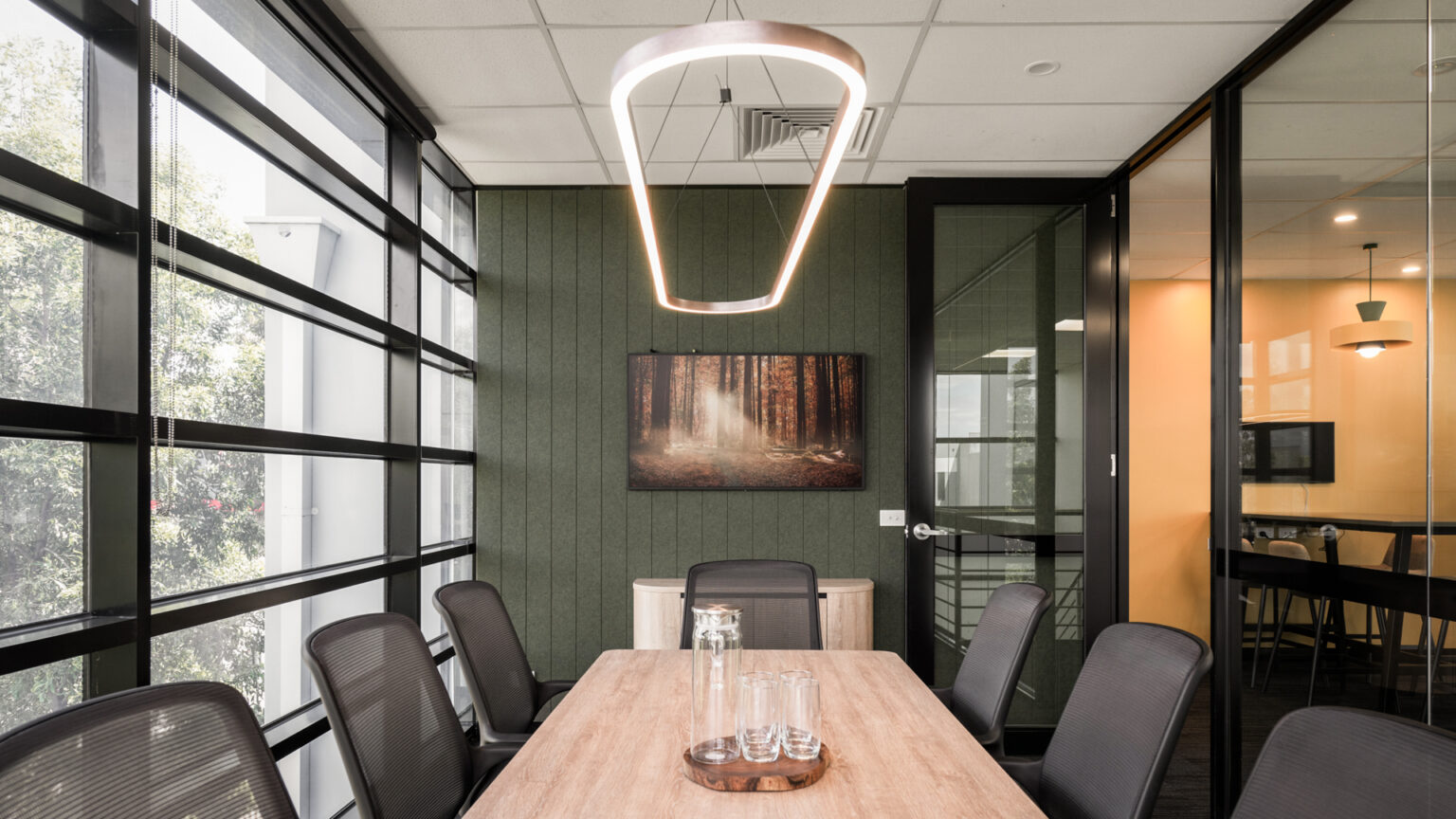
What Sets Leading Office Fit Out Companies Apart in 2026
The role of workplace specialists has expanded well beyond delivering construction projects. Organisations are asking these questions before design begins and fit out partners are expected to combine strategic thinking, workplace insight, and delivery expertise throughout the entire project lifecycle.
Increasingly, businesses are looking for partners who can:
- Understand organisational goals before proposing solutions.
- Align workplace decisions with long-term business strategy.
- Balance employee experience with operational efficiency.
- Coordinate design, construction, and project delivery through a single process.
- Reduce project risk through early planning and clear stakeholder engagement.
Rather than viewing design as the starting point, experienced Office Fit Out Companies Melbourne understand that successful workplace projects begin with asking better questions.
That approach creates workplaces that continue delivering value long after construction is complete.
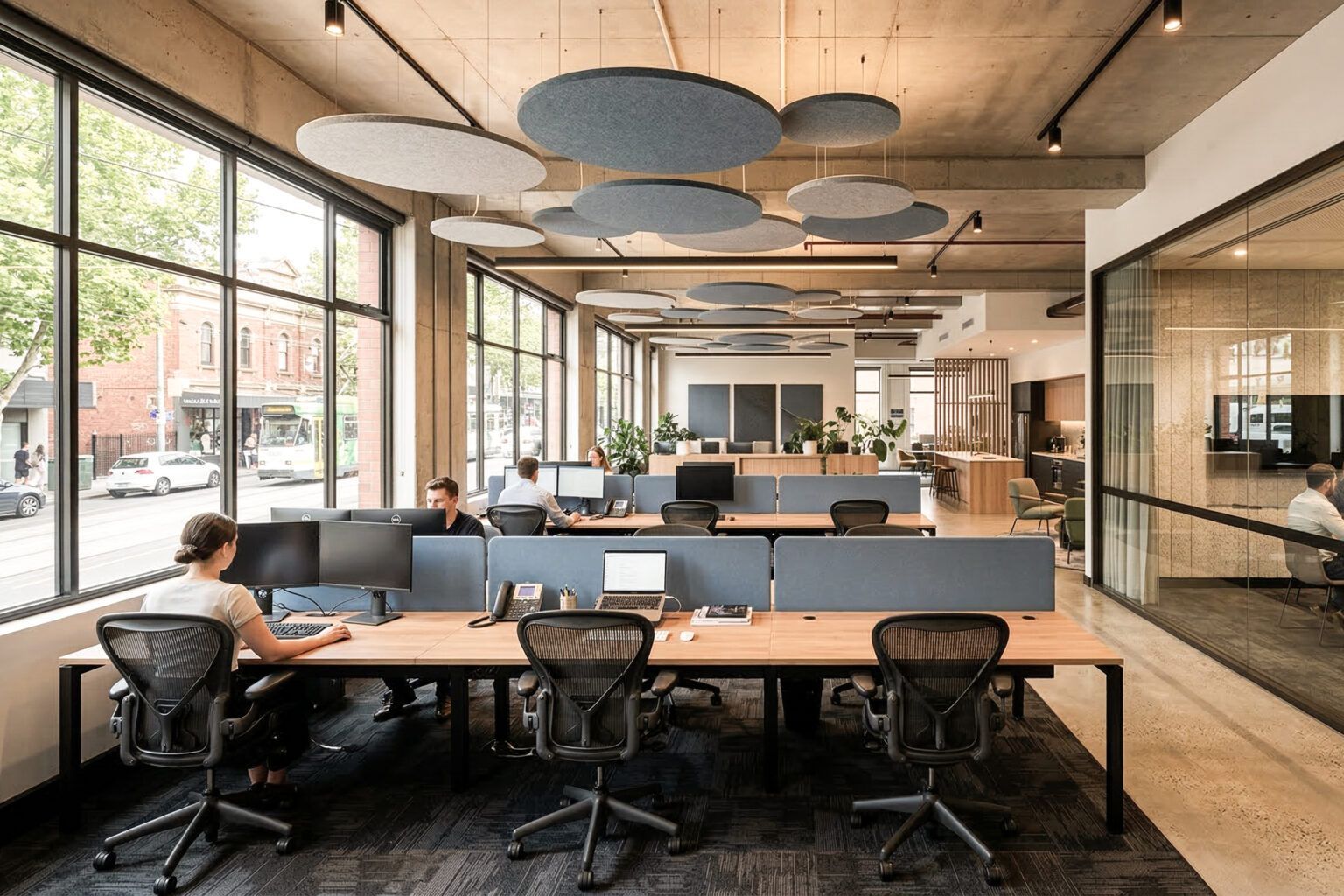
Looking Beyond 2026
The future workplace will continue to evolve alongside technology, employee expectations, and changing business priorities.
What is becoming increasingly clear is that successful workplaces are no longer measured solely by appearance. They are measured by how effectively they support the people who use them every day.
Many of the emerging office fitout trends in 2026 reflect this broader shift towards workplaces that are flexible, connected, and strategically aligned with business objectives.
Businesses that invest in thoughtful planning today are likely to be better positioned to respond to tomorrow’s challenges.
Conclusion
The expectations placed on workplace projects have changed significantly. Businesses now expect Office Fit Out Companies in Melbourne to deliver far more than attractive office environments. They are seeking partners who understand workplace strategy, technology integration, hybrid work, and long-term business performance.
Whether responding to the demands of hybrid work office design across Australia or delivering a modern office fitout in Melbourne, successful projects begin with a clear workplace strategy.
If you’re planning your next workplace project, explore Sensa Interiors’ approach to Office Fitout Design.You can also discover how Sensa delivers tailored workplace solutions across Victoria on their Office Fitouts in Melbourne page.
Frequently Asked Questions
What are businesses expecting from office fit out companies in 2026?
Businesses are looking for strategic partners who can help solve workplace challenges related to hybrid work, technology, employee experience, and long-term flexibility, not simply deliver construction outcomes.
Why is workplace strategy important before office design?
Workplace strategy helps organisations understand how their teams work, identify operational challenges, and create a clear direction before design begins. This leads to more informed decisions and stronger long-term outcomes.
What are the biggest Office Fitout Trends in 2026?
Some of the biggest trends include activity-based workplaces, integrated technology, flexible layouts, improved space utilisation, and greater emphasis on employee wellbeing and collaboration.
How does hybrid work influence office design?
Hybrid Work Office Design Australia focuses on creating workplaces that support both in-office and remote employees through flexible collaboration spaces, quiet work areas, and technology that enables seamless communication.
Why are Melbourne businesses investing in modern office fitouts?
Many organisations are using modern office fitout projects in Melbourne to improve employee experience, support changing work patterns, make better use of office space, and create workplaces that can adapt as business needs evolve.