Why Many Office Fitouts Fail Before Design Even Begins

Jumping straight into design can feel like progress, but without a clear direction, it often leads to inefficiencies and costly changes later. Successful commercial office fitouts are not driven by aesthetics alone. They are shaped by a considered workplace strategy planning process that defines how your space will actually function.
Before layouts, materials, or finishes are explored, you need clarity on how your teams work, collaborate, and grow. A strong office design strategy ensures every decision is grounded in purpose rather than assumption.

What Is Workplace Strategy Planning and Why It Matters
A workplace strategy goes beyond furniture and floor plans. It defines how your office will support your business objectives, employee needs, and operational workflows.
Without strategic planning for office renovations, businesses risk creating spaces that look impressive but fail to function effectively. A workplace strategy ensures that every design decision is purposeful and aligned with measurable outcomes.
For a deeper understanding of how strategic design impacts outcomes, explore Sensa Interiors’ approach to workplace transformation – the SensaARC methodology.

How Workplace Strategy Drives Better Commercial Office Fitouts
Aligning Design with Business Goals
Every organisation has different priorities, whether that is scaling operations, improving collaboration, or attracting talent. Workplace strategy planning ensures these priorities are reflected in your physical environment. Commercial office fitouts that begin with strategy are better positioned to support both your current operations, and future direction.
Enhancing Employee Experience and Productivity
The way your workplace feels has a direct impact on how your people perform. An effective office design strategy considers movement, noise levels, lighting, and access to different types of work settings. By understanding how your teams operate, you can create spaces that support both focused work, and collaboration, improving engagement across the board.
Supporting Hybrid and Flexible Work
Many organisations are continuing to refine how hybrid work fits into their operations. Through workplace strategy planning, you can determine how often teams are in the office, what spaces are required, and how flexibility can be built into the layout. This ensures your commercial office fitouts remain relevant as working patterns evolve.
Future-Proofing Your Office Space
Change is inevitable, whether it is team growth, new technology, or shifts in business direction. Workplace strategy planning allows you to build adaptability into your space from the outset. Modular layouts, multi-purpose areas, and scalable infrastructure all contribute to a workplace that can evolve without constant disruption.

Key Elements of an Effective Office Design Strategy
Understanding Work Patterns
A clear understanding of how your teams operate is essential. This includes identifying which roles require quiet focus, which rely on collaboration, and how often different spaces are used. We often find that combining data with staff input leads to more accurate, and practical design decisions.
Space Utilisation and Efficiency
Avoid underused areas by designing spaces based on actual usage data rather than assumptions.
Technology Integration
Modern workplaces require seamless technology integration to support communication and collaboration.
Brand and Culture Alignment
Your office should embody your brand identity and reinforce company culture at every touchpoint.

The Risks of Skipping Strategic Planning for Office Renovations
Inefficient Layouts
Without strategy, spaces may not support workflows, leading to frustration and reduced productivity.
Increased Costs Over Time
Poor planning often results in rework, driving up costs and disrupting operations.
Lack of Flexibility
Offices designed without foresight struggle to adapt to changing business needs.
Bringing Strategy and Design Together
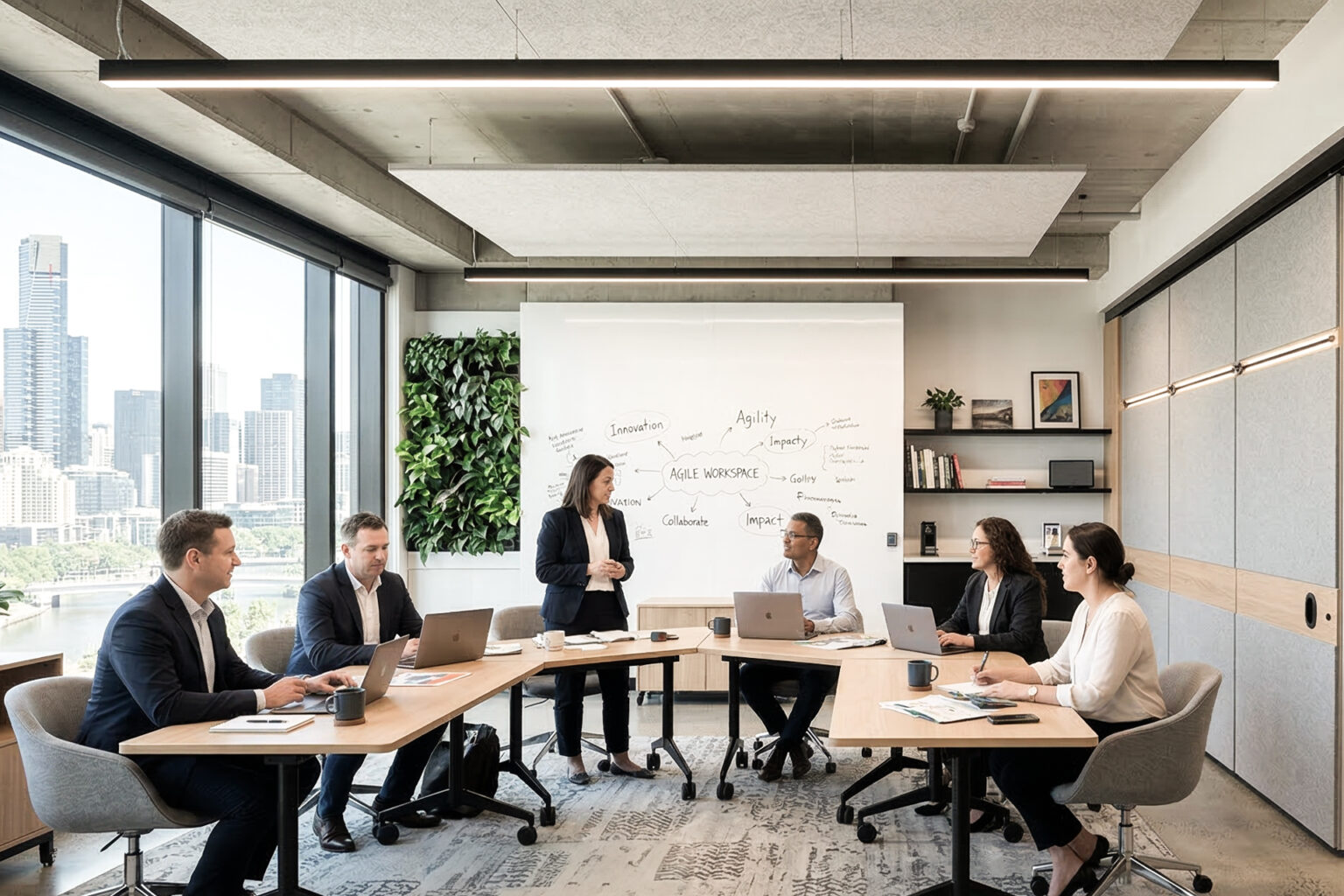
A well defined strategy provides a clear path from concept to completion. It ensures that commercial office fitouts are not only visually considered but also highly functional and aligned with business objectives. By focusing on workplace strategy planning first, organisations can create environments that support performance, culture and long-term growth.
An experienced team can guide this process, translating insights into a cohesive and practical outcome. Whether planning a new workspace or undertaking strategic planning for office renovations, starting with a clear office design strategy ensures that every decision contributes to a better workplace.
To explore how a strategic approach can shape your next project, visit: